Monday, September 11, 2006


I was just checking weather for a trip bringing the boss back from the States. I was on hold with FSS and my pal Richard called me. He just said "Turn on the tv". So I did, in time to see the second plane hit the tower.

I seriously thought about taking a plane and heading north for 1/2 a tank of gas, then landing at the most remote strip I could find. Then I remembered about the military base nearby, figured they'd be going out of their minds with worry and rage, and decided to stay on the ground.

And now, five years later, Bush and his neocon pals have fed the public a steady diet of fear while eroding civil rights and spying on his own citizens. How far behind is Canada? That's a scary question indeed.

What are we prepared to give up in the name of 'security'? Hair gel and liquids? Our personal identities? Our right to free speech?

Sunday, September 10, 2006

//edit Sept 27th:

Welcome visitors from Linn's Blog
I hope you find some of this useful

---------------------------------------

During the past week I have had the chance to review more than 150 resumes from pilots. Some are great. Most are mediocre. The rest are awful.

Here are some of my opinions regarding resumes;

Feel free to tell me to eat a brick. But I have put some thought into this post.


Stick to plain fonts and black ink/lettering. I have received resumes in all the colours of the rainbow and in all fancy lettering and it only makes reading them (and printing them out when needed) more difficult.

Use a spell-checker.

"I have lived in Saudy Arabia for the past 3 1/2 years. I enjoy Soudy Arabia but would like to come back to Canada"

"I am a perfessional pilot"

"I would very much lik the chanse to meet you in to discuss my application"

"I have a great attentions to detail"

And yeah, all of those are from people who use English as a first language.


68 of the 150 resumes I have seen have some sort of spelling error. Take the time to put some polish on it. If you aren't sure how some words are spelled, ask or check online. This is your initial contact with your future employer, so take the time to do it right.

Yeah I know flying isn't a spelling bee, but when you have dozens of resumes that would potentially qualify, you start looking at ways to thin the pile. Spelling is an easy one, so don't fall victim. If I used this as an example, I would manage to thin the pile from 150 to 80 right away, and still have 80 qualified people to choose from.

Do not use a standard cover letter and send it off to all different companies in one email especially when each recipient can see all the other company names. Take the time to personalize your cover letter to each and every company individually


Take the time to research the company: Address your cover letter to the chief pilot by name and not simply "Dear Sir".


Have a table on the front page that lists your flight times. More people are doing this, but some people still bury their flight times in paragraphs of text, or halfway down the second page. Please don't use decimal places, like (Multi: 185.6) It's my pet peeve. Feel free to round up to the nearest hundred hours. Doesn't Multi: 200 sound better anyway? And by the time you get interviewed and/or hired, you'll prolly have the extra 14.4 hours. 120 if the 150 resumes had tables on the front. 3 had no mention of flight times at all on the entire resume.

Have a contact phone number that works, and that you check on a regular basis. You'd be surprised by how many people put old contact info on a resume, or don't update it when their residences change.

Please put your references on your resume. I am of the opinion that I'd prefer to check someone's references in private rather than calling them up and giving them a false sense of hope. "References on request"? What, you going to make me beg? "References on request" sounds likes it's too much trouble for you to include them. If you're not going to tell me, then don't include a "References" section on the resume. I'm going to ask around about you anyway. Oh, and if you are going to use someone as a reference, make sure they know you are using them, and make sure they like you. Again, you'd be surprised. I was.

Ask yourself, I mean seriously ask yourself, "Is it worth it to put a picture of myself on my resume". Maybe it works for some people, but I have yet to see a decent pic of anyone on a resume. It just looks lonely or desperate or something. 6 of the 150 resumes had pictures of the pilots on them. One resume actually came with 5 pics of the pilot standing in front of various aircraft.

Keep it short, and keep the non-aviation-related stuff out. You may have been a king or a street sweeper, but neither of those jobs is relevant to aviation. You might like pottery, hunting and non-dairy creamers, but unfortunately it doesn't really matter. Of course if a job requires additional skills on top of being a pilot, please include them in your resume.

If you have a commercial license do you really have to state that you have a valid cat. 1 medical.

For the most part, you do not need to mention every single engine airplane you have flown. "Various single-engine aircraft such as, C150 and C172" will suffice. If you are applying for a single engine position, then include the single that is most applicable to the job.

Don't offer to pay for training. It lowers the standard for us all. Especially don't offer in such a way as this "I will pay for my own type rating if I get a minimum 2-year contract with a minimum of 400 hours a year". Yeah, that's a quote from an actual recent resume. If we can afford the plane, we can afford to train crew. Of course if someone is already typed we take that into consideration, but there are other factors we use. I'm going to paraphrase a pal of mine now; "Hire someone 30% based on skill and 70% based on personality. You can change someone's skill set but you can't change their personality". I agree with that totally.

Keep your chin up. This is a very difficult industry and heartbreak and disappointment are par for the course. If you want it bad enough, and if you put work into it and are patient, you will get a good flying job. I was unemployed for nearly 7 months before I got my present job, and I sent out hundreds of resumes and attended 3 interviews before I got hired. On the interviews I was unsuccessful at, I took notes for myself on what I learned from it, and what not to repeat (or what to repeat for sure) on the next interview.

Suppose we had a single position to fill. That means that 149 people will be rejected through no fault of their own. That sucks, but that's life.

The hiring process is brutal, uncertain and somewhat random, so don't get down if you experience rejection again and again. Believe in yourself and that you have what it takes, and sooner or later someone else will see that too.

Saturday, September 09, 2006

I was in the process of chronicling my move from northern Saskatchewn to Southern Ontario, when something more interesting to me came up, so I'm going to go with that for now. I'll detail my Goderich experiences over the next few weeks.


Our F/o may be leaving. So I put an ad in Avcanada to see what the state of the industry is, and what our prospects are for a quick replacement. I have received a whole pile of emails regarding the job, and I wanted to share some things about it, in case there are any hungry pilots out there who would like to hone their resume / cover letter skills.

Here are some quotes from some of the emails I received:

"I am a customer orientated person with strong IFR skills."

I assume this person always points in the general direction of the customer, much like a compass


"If you would consider me as an fo on a citation I will send you a cover letter and resume."

I'm guessing this person isn't familiar with Catch-22

"To whom this may concern,
I am currently an 18 year old Canadian Commercial Multi pilot, with a valid passport. I am currently under going the last stages of my IFR training and was wondering what the requirements where for your Citation First Officer position."

I'm honestly not sure how I could have made "Requirements: Commercial, multi-ifr" any more clear.

"I've arranged FBOs, customs and flown into airports such as Teterborough"

Having flown there once or twice a week for the past long while, I know it's spelled "Teterboro". Attention to detail is really important, even if you're only flying a Citation II into Canada's busiest airport on a daily basis :)

"I hop to talk to you soon about future employment with your company."

I assume this pilot is part kangaroo, which is unfortunate as the cockpit is rather small. Or maybe they mean they have a bouncy personality, who knows.

"I am a reliable, enthusiastic and hard working individual with a high learning curve and effective communication skills"

A high learning curve is the last thing we want from a pilot, as it implies they would require much more than the normal amount of training to become proficient. I'm guessing the phrase doesn't mean what this pilot thinks it means.

"I am not applying for the FO job you have advertized on avcanada...I am looking for work, I have an engineering degree, an ATPL and more than 5000 hours tt."

Sneaky. The aviation business could use more people like this one :)

"I shall be very grateful and hard wroking."

Awesome dude! Someone who will wrok hard! Perhaps we can rewire the aircraft for electric guitar plugins.

" As a Chef Pilot I have a strong background in working with operations related materials and records."

Mmmmmm, chef pilot. If this was actually true, this person would have a definite advantage in their candidacy - anyone who can prepare delicious inflight meals would be great company on long trips.

Anyway, I'm not a total type-A personality and none of the pilots I am quoting have disqualified themselves from candidacy, but I just wanted to share a few giggles.

More on the topic of resumes in a bit.

Thursday, September 07, 2006

In September 1998, I was living in northern Saskatchewan and dreading the possibility of spending another winter there. A coworker had a CD that listed all the commercially registered aircraft in the world, along with the owners and contact information, so I passed my few idle hours by spamming the country and mailing my resume to every operator in Canada who ran Navajos and Barons, the two aircraft I was qualified on at the time. I hadn't received a single reply in weeks, when out of the blue I got a phone call. It was from a Mr. James Kirk, and he asked me to fly his Baron for his air taxi service out of Goderich. I said sure! and then used my roomate's dial-up internet account to find some facts on Goderich, like where it was and if it had paved roads and running water.

As it turns out, Goderich is a strikingly beautiful small town on the shore of Lake Huron, about an hour north of London, or two hours west of Toronto. It's often described as the prettiest town in Canada, and it's a well-earned title. There are lots of gorgeous brick homes and a downtown square that is ringed by cool little shops and restaurants nestled within historic buildings. The streets are lined with magnificent flower beds, and the beach area is very well developed, which brings lots of people flocking to lay in the sun by the waters of Lake Huron in summer. People in Goderich routinely leave the keys in their cars and their front doors unlocked, and it's safe to walk the streets at any hour of the day. For real.


Summer sunset in Goderich.


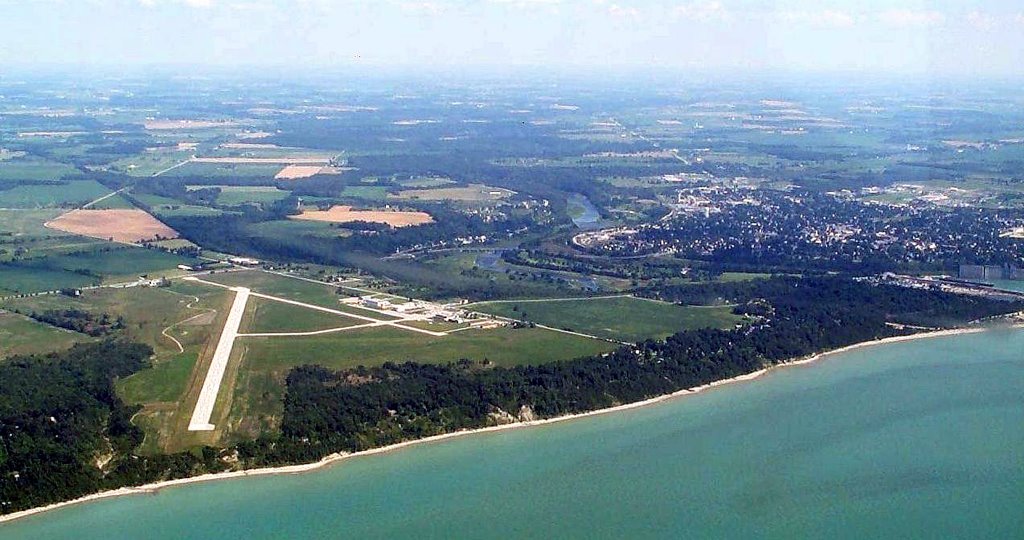
The airport in Goderich, CYGD. If you look closely you can see the grass runway halfway down the main runway, on the near side of the taxiway. That features in future stories.

I gave my two weeks notice at Northern Dene Airways. The Chief Pilot, Dwayne (mentioned in previous posts) responded by asking me to wash and wax the office floor before I left, which I agreed to in a moment of endorphin euphoria. I want to repeat myself by saying Dwayne defines "weiner".

Once my two weeks were up, I boxed up my music collection, my Nintendo 64, and a couple of pilot shirts, then flew south to Saskatoon. I got my trusty '85 Accord out of storage at my dad's house and started the drive east from Saskatoon toward Toronto, where I would be staying with a friend until I had a place in Goderich. I had driven Saskatoon to Vancouver before in 22 hours, and I figured Saskatoon to Toronto would be about a 15-hour drive. I was wrong.

Wednesday, September 06, 2006

A caribou hunt is a messy affair. It's a visceral sensory experience, featuring sights, sounds, smells and textures that you will find in no other situation. Trust me when I say that's a blessing. The routine was generally the same, whether it was fall or spring. In Stony Rapids, the local government would give maybe a thousand dollars to each local hunter who signed up, to put toward the cost of a hunt. They'd come to us, and we'd load 3 of them and myself into a 185 on skis, then jump in and head to where the caribou were running.

It was a stunning and beautiful sight to fly over the caribou as they ran across the frozen north; there were thousands upon thousands of them making the trek across the land, and it gave me hope that the earth hasn't been totally destroyed by humans just yet, and that nature was still in charge in some places. If you have ever flown at 3,000' and seen a hundred thousand large animals take up all the space between you and the horizon, you'll know what I mean.

Once we found the herd, we'd buzz them in such a way as to seperate a few of them from the main group, perhaps using the plane to chase a half-dozen of them toward the open shoreline of a frozen lake, or into a dead-end open space between two thickets of trees. We'd land quickly, not giving them time to bolt past us and rejoin the herd, and the hunters would immediately jump out of the plane and start knocking the caribou down with their rifles.

Actually, they'd try, but most of the locals had rifles that had probably seen service in the previous century, complete with tape over rust holes in the gun barrels, so their accuracy wasn't so great. I had bought a hunting rifle, a Ruger 223 Mini 14, from Luke, the gun-nut Navajo-roller I wrote about a while ago. It was a good deal; I bought it for $250 and a whole bottle of rum, my thought being that a rifle might come in useful in the great outdoors and even more so if I had a mechanical failure and wound up in the bush for any length of time. It was in good shape and had a scope, and it wasn't long before I started helping out the hunters on the hunts. Years of playing video games had apparently helped my aim, and after a short while I got to be a pretty good shot, so much so that on some trips the hunters would simply bring a box of ammunition for my gun and ask me to do the actual shooting, as my ammo was cheaper and my gun more accurate than theirs. It really saved a lot of time and effort if I could knock down 6 caribou with 6 or 8 rounds in 2 minutes rather than them knocking down 6 caribou in half an hour with maybe 30 rounds. I take no joy at all in killing animals, but I understand that's where meat comes from, and I did my best to be quick and humane.

As an aside, my mother teaches yoga, and she owns her own yoga studio. She also reads this blog from time to time, and I'm thinking right now she's going "Oh my Goddess, my son is a murdering carnivore!" Sorry mom, but it really was quick and my rifle was a better end for the animals than at the tender mercies of the local hunters who only cared about immobilizing the caribou for long enough to chop them into caribou burgers.

Anyway, once the furry beasts were dispatched, the hunters were very efficient at converting caribou to caribou cutlets, and it only took a couple of hours before a small herd was reduced to a large pile of of meat. Very little was wasted, if any, and I was always impressed by that. This isn't like a hunter blasting an animal just so they can mount the head on their living room wall; up north, it all got used and when the hunters were done, all that was left behind was a little bit of darkened snow.

The hunters would then cut blocks of ice from the ground and carefully stack the ice around the meat, which would deter predators such as wolves or ravens from feasting in our absence. We'd all get back in the plane, and head for home, where the hunters would disembark.

If there was enough daylight left, I would fly back to the spot where the caribou met their end, stretch a blue tarp inside the back of the airplane, then move the ice blocks and load the frozen meat bits for the return flight to the airport. If there wasn't enough light or the weather was bad, I'd maybe wait until early the next day, hoping that the ravens hadn't gotten into the meat cache. The ravens up north were the size of small ponies, and depending on the weather it could be upwards of a week before the meat got picked up again, so proper storage was very important. Otherwise it was entirely possible to return to a meat cache where 800 lbs of frozen caribou had been stored a few days before and instead only find a few bone chips, along with some steaming thank-you notes from a pack of wolves.

I once broke a rear window in the 185 while loading a leg - I wasn't paying enough attention and accidentally heaved the sharp part of the hoof through the plexiglass, which shattered into little tiny pieces. It was a loud and cold flight home, and when I landed at the airport and told the boss, he took it off my paycheque.

I estimate I personally got 50 caribou in total during the trips I did. If reincarnation exists, you KNOW what I'm coming back as.

Monday, September 04, 2006

Random boring pics.


I'm enjoying the ability of my camera to take little movie clips. The sound sucks unfortunately, and I won't be a director of photography any time soon, but this is a quick look into my office. Next time I go flying (Friday I think) I'll see if I can prop the camera on the dash for takeoff and landing.


A better resolution pic of the office.


Teterboro beneath, with New York in the background. It's a busy airport, but not a scary-busy airport.


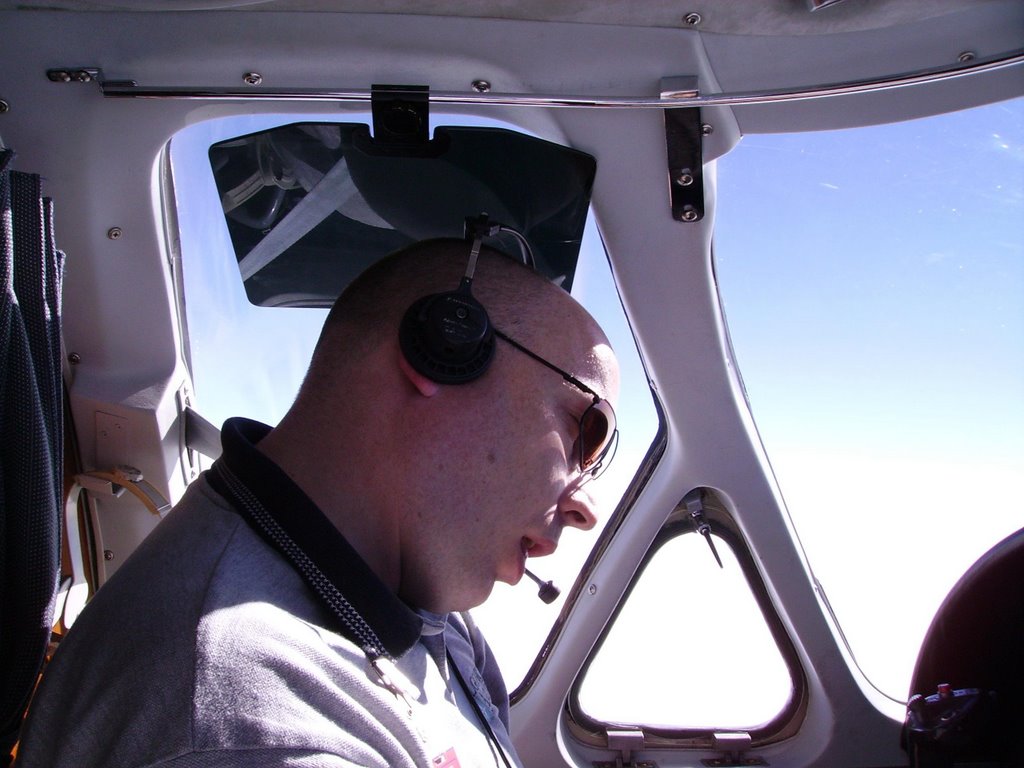
Here I am in a moment of quiet contemplation. Yes, it's a staged photo :p


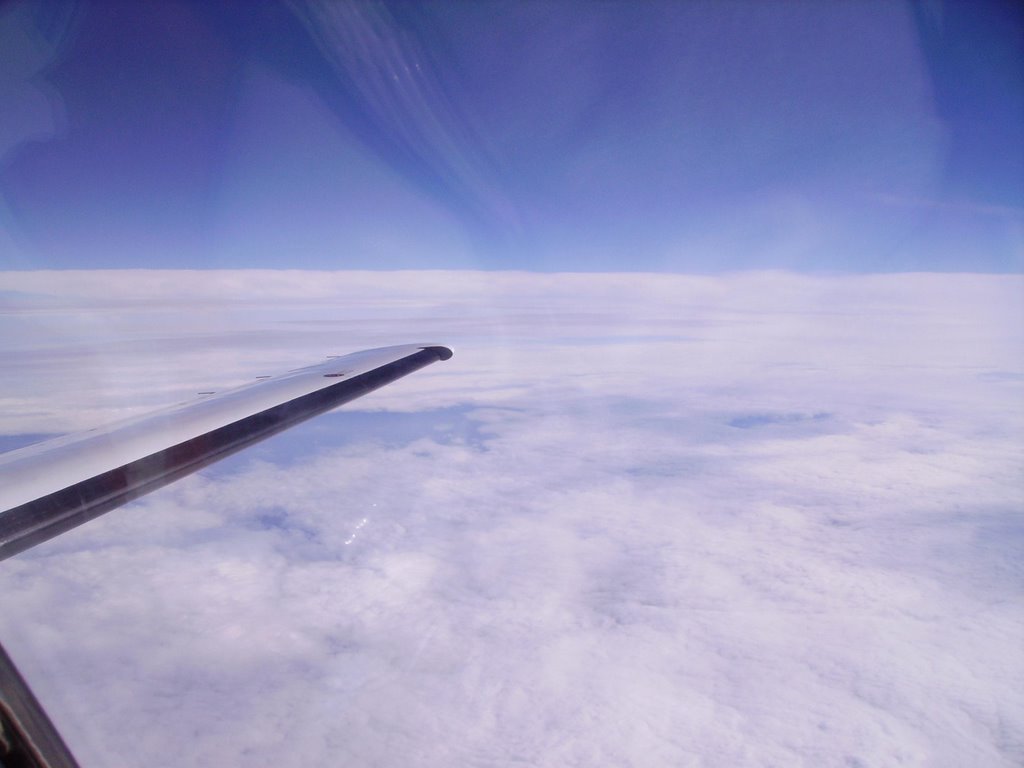
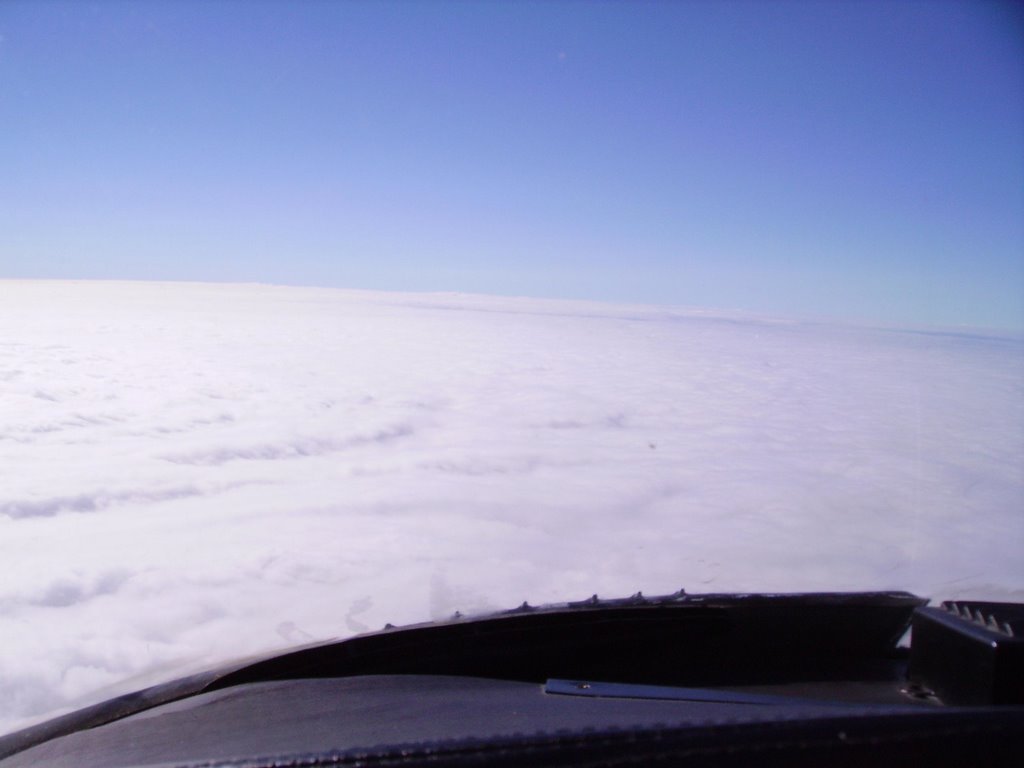
It was a nice undercast layer all the way home from Teterboro. I tried to film the approach and landing, but I messed up and pressed the wrong button. Next time.


The mighty jet back in Toronto at the end of the flight. The remnants of Ernesto are drifting by.

Saturday, September 02, 2006

Ernesto is busy soaking the entire New York area, so it's indoor activities for me today. Gonna hit the mall and breathe in some yummy nutritious mall air. Maybe pick up some cheap booze from Sam's Club (the bulk equivalent of Wal-Mart) where some kinds are even cheaper than in Nassau. I mistakenly spread the word amongst my circle of friends that I have access to cheap booze, so on every trip I seem to get a shopping list of stuff to pick up for my pals. "I'd like 5 bottles of $5 vodka and maybe one bottle of expensive vodka so when it gets empty I can pour the cheap stuff in the expensive bottle", says my rooommate, a Dash-8 f/o for Jazz.

What is it about pilots and drinking anyway? In my experience, the average pilot is a social drinker at the very least, and I'd bet that the alcoholism rate for pilots is higher than in the general population, though I can't find any data on Google. I assume the rate has lowered over time, but it's still high, and the rate in the olden days was pretty atrocious: In the 1960s, more than 30 percent of pilots who were killed in plane crashes had elevated Blood Alcohol Contents. (see HERE)

Here's my theory: I have no special love for booze, but I do enjoy the occasional cocktail. If I'm bored, I look for a way to pass the time; for me it's not booze, but for lots of people it is. Getting drunk passes time, it's relatively cheap, and you can do it from the comfort of your own hotel room. I know lots of pilots who fly to amazing places and spend the entire time in a hotel room rather than going exploring; maybe they figure that getting pissed in the hotel bar counts as exploring the city. Maybe because spending time in a strange city by oneself can be really lonely and booze helps to dull the pain, or maybe it's nothing to do with any of that. You tell me...

What do you think? While you are pondering that, watch Bob Hoover in this amazing video. Watch to the end of the clip to see how it applies to this particular post - it's somewhat relevant ;)


Friday, September 01, 2006

I flew to Teterboro, New Jersey yesterday, taking one of the bosses and his friends/family to the US Open. Teterboro is about half an hour away from downtown New York. I am staying at the Marriott in Secaucus, New Jersey. It's decent enough. There's a bus across the street that takes me directly to Grand Central Station in Manhattan for $5 return. The trip takes 20 minutes and then I'm right in the thick of things.

We go back on Sunday afternoon, so I'm gonna spend some time wandering around Manhattan. Hopefully tropical storm Ernesto won't be a big deal on Sunday. Hopefully.

Here are a few pics. I'm certainly lack Brian's skills (he did the airplane pics featured in yesterday's post) but hopefully you can see some of what I saw.

That's a definite perk to this job - I get to travel to some fairly fun places.

First a crappy video from my camera - yeah I know the resolution sucks. Then some pics, taken at a much higher resolution.


The view from Times Square


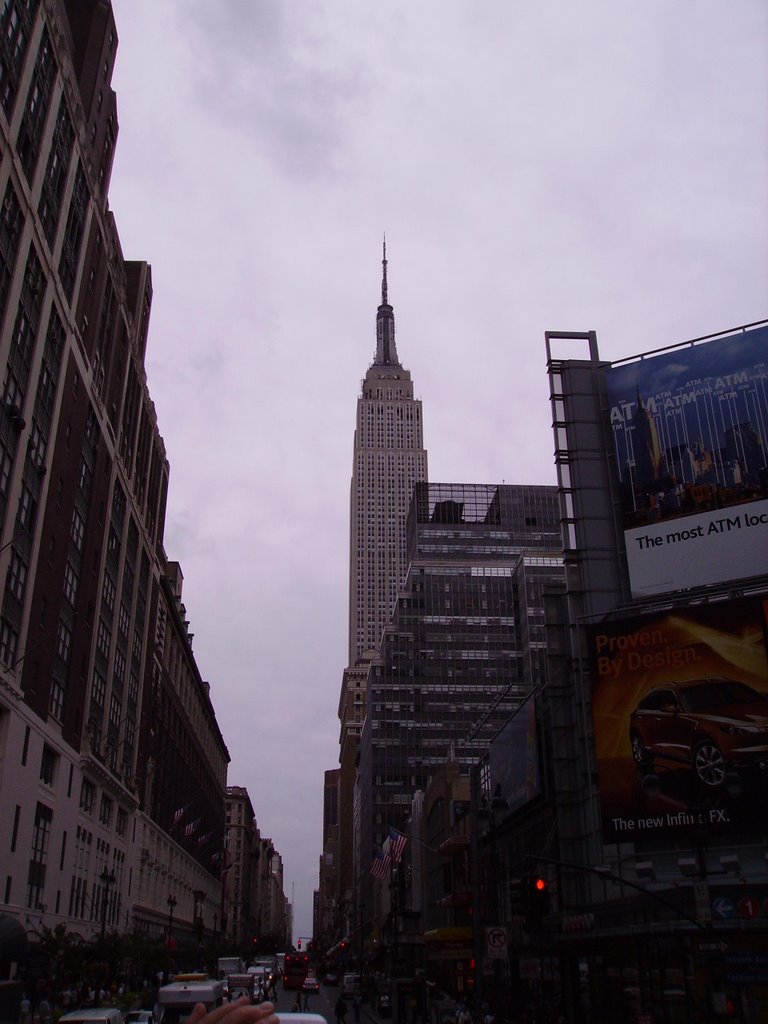
The Empire State building. You can take an elevator to the 102nd floor for $16, but it's about a 4-hour wait in line.


When this building was going up, the builders ran out of money and threw a roof on the floor they had just completed. That's why it looks half-finished, 'cause it was.


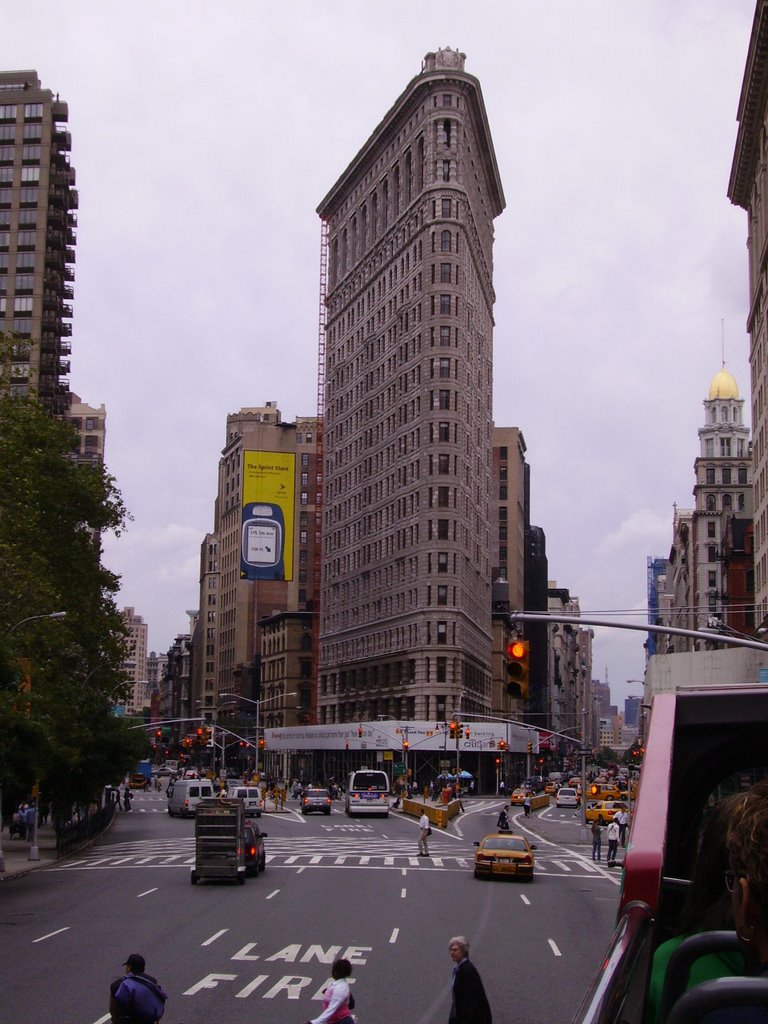
This building occupies a wedge of land. It's only 6 feet wide at it's most narrow point. In Manhattan, every inch of space is being used for something.


This was across from Ground Zero. There are piles of messages on this fence, looking for lost loved ones. Ground zero itself is just a big hole, but for some reason there are high fences around all of it so it's really hard to see the hole.

And then my batteries died, so that's it. That'll teach me not to bring spares.

I bought some rechargeable batteries for tomorrow.

Thursday, August 31, 2006

All these were taken by a friend of mine, Kitsch. He is a pilot also, and he sure knows his way around a camera. All credit goes to him for these great pics. If you want him to do your birthday or wedding or whatever, email me and I'll hook you up.

Click on the pics to make 'em bigger.


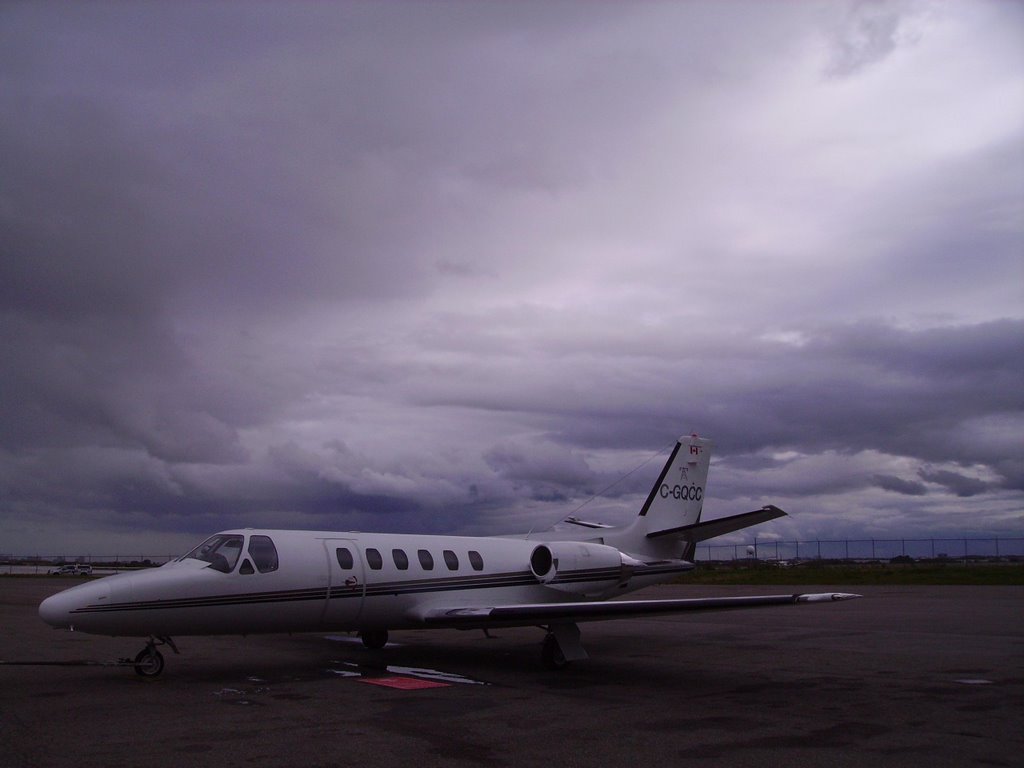
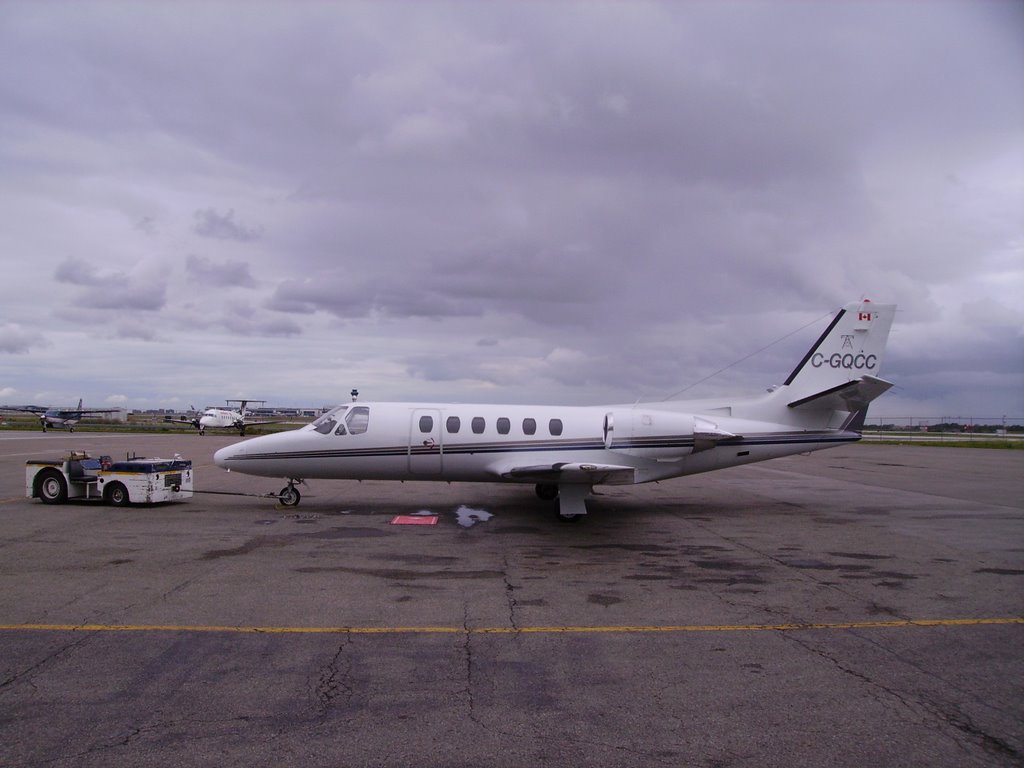
Our fine 550 sitting at the brand new Landmark hangar at the north end of Pearson last Sunday.

Today we are gonna see some more pics of one of my beloved 550's. The other plane was out flying the day these were taken so you'll have to wait for those ones.

She is a hard-working, good-natured airplane.


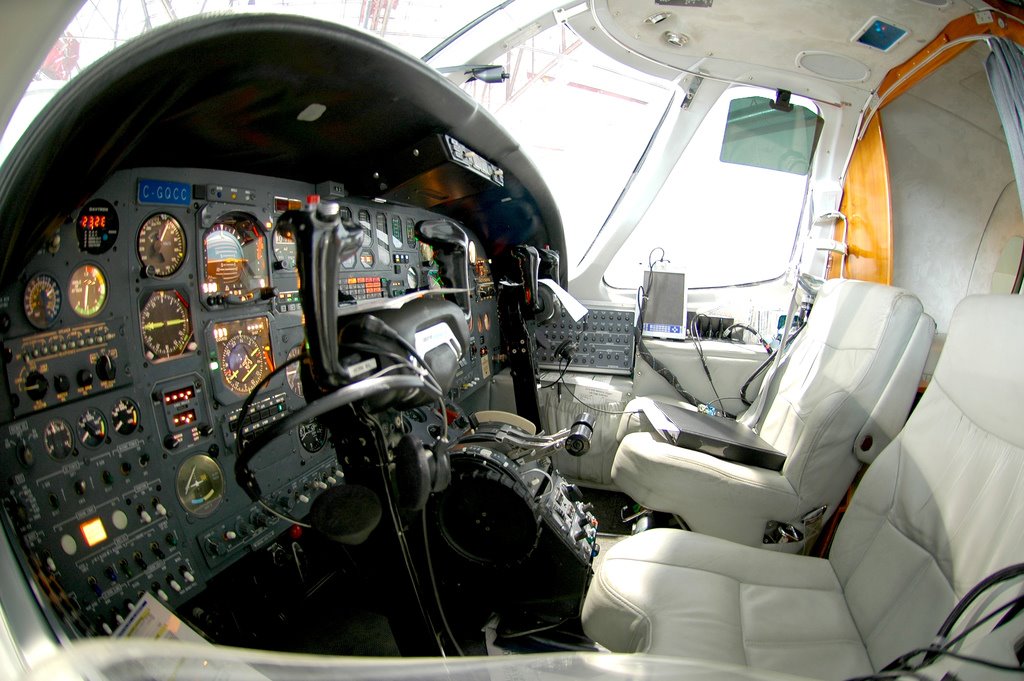
Old-school instruments. You can see the tablet PC that I was babbling about in previous posts, it's up against the copilot's window. We see satellite weather and can put approach plates on it with the aircraft overlaid on the approach plate. The plane just came out of inspection, so we hadn't hidden the wires to the tablet yet and it was a bit ugly until we did.

Note the little tiny headsets. They are noise-cancelling too, which is a nice bonus. Unless the batteries wear out and I forgot to buy new ones and the boss arches his eyebrow and I know I have done wrong.


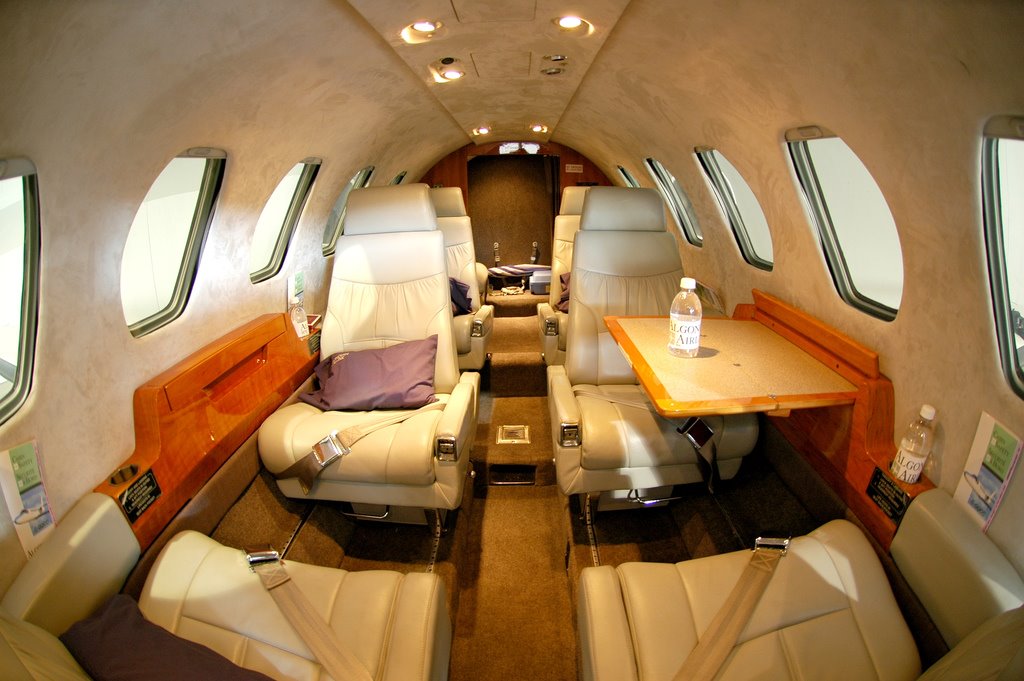
Inside the laquered cabinets are snacks, a whole lot of booze, more snacks, coffee, hot water for tea, pop and juice, cups, plates, more booze, and some other stuff that I can't remember right now. The sideways facing divan (apparently a fancy word for 'couch') can seat 2 people.


Facing the rear of the aircraft, we can see the potty area in the distance. Nobody seems to use the potty even though it's fully functional, so we mostly use that area to store laptops and excess baggage, along with a large cooler full of beer, juice, water and wine.

We represent awesomeness, so we have our logo on our own bottled water, pillows, blankets, etc. Kind of geeky, but kind of awesome at the same time.

Wednesday, August 30, 2006

The flight home from New York was good, the weather is beautiful in Toronto today. The passengers were happy, and I really have nothing to report.

Tomorrow, I'm heading back to New York city for 4 days, so I'm gonna tour Manhattan and buy some dodgy fake Rolex watches, maybe a handgun or two, and of course some crack. Kidding, kidding, I'd never buy a handgun.

Anyway, pilot geek stuff coming right up:

Suck, Squeeze, Bang, Blow.

No, that's not what you think it means at all, it's how engines operate, whether they be piston or turbine. Today I'm bored, so I'll quickly run through how a turbine engine works. It's pretty simple, and it won't take long.

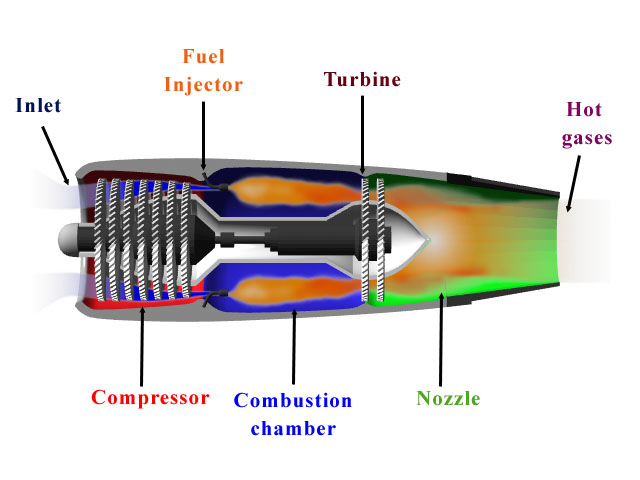
At it's most basic : compress some air, add fuel and ignite it. The expanding hot gases are channeled out the back of the engine, pushing the engine forward. The engine is attached to the airplane, so the airplane is pushed forward.


Click on this to make it bigger


At the front of a jet engine is a fan (called a compressor) that spins at a very high speed - our jet engine compressors spin at around 35,000 rpm in normal flight. When air enters the engine, the spinning fan blows the air into a small chamber. This compresses the air, hence the name. In the small chamber, the air combines with fuel and the fuel/air mixture is ignited, causing the air to greatly expand. The expanding air rushes out toward the back end, but in order for it to get out the rear of the engine, it has to run through a pinwheel (called a turbine) in the back, causing the pinwheel to spin. After going through the pinwheel, it shoots out the back of the engine, and that pushes the engine forward. We call this thrust. What does the pinwheel near the back of the engine do? Well, the pinwheel in the back is linked to the fan at the front, so spinning the pinwheel causes the fan to spin, which compresses the air which goes through the engine which burns and shoots out the back, spinning the pinwheel, causing the front fan to spin and so on and so on in an endless cycle.

There are 2 basic types of applications of turbine engines in aviation - turboprops, and jets. A turboprop is essentially a plane that uses jet engines to spin propellors, while a pure jet dispenses with propellors entirely, using the thrust of the air out the back of the engine to move the plane forward.

In a turboprop airplane, the pinwheel also spins the propellors, which takes up most of the energy of the air rushing out the back. The thrust out the back of a turboprop is generally a small part of the total power produced - I think in the last turboprop I flew - the MU-2 - for engines that were over 700 horsepower each, the residual thrust each engine produced was only like 50 pounds, the majority of the power was as a result of the spinning propellors. In a jet, there are no props to spin, so the air blowing out the back of the engine makes up all the thrust.

The reason most turbine airplanes fly high up in the air is because the air is generally colder at a high altitude. When the air is cold, the air molecules huddle closer together and that provides greater expansion when the air/fuel mixture is ignited in the engine, which helps increase the efficiency of the engine. Above a certain altitude, say around 35,000', the air stops getting colder so most aircraft don't bother climbing up higher than that because the engine efficiency stops getting much better above that altitude. Most turbine engines run on jet fuel, which is essentially kerosene. That being said, if we are in a pinch we can run our turbine engine safely on just about any kind of gasoline with a few restrictions and as long as we don't run it for very many hours before replacing the fuel with real jet fuel.

Turbine engines are very reliable and actually really easy to operate - you run the engine faster to produce more power (subject to temperature and rpm limitations - you don't want to melt the engine or overspeed it but that's generally not easy to do accidentally). They are very light for the amount of power they produce, and a jet engine can easily put out far more power than a piston engine of the same size. They do cost a hell of a lot of money though - a new engine for our jet can run around half a million dollars and a single engine for a large passenger airplane can easily run to ten million dollars or more.

I went to flight school for 2 years to learn that, and now you know it all for free in about 2 minutes :D

Tuesday, August 29, 2006


When I get a cat I'm totally taking it innertubing.

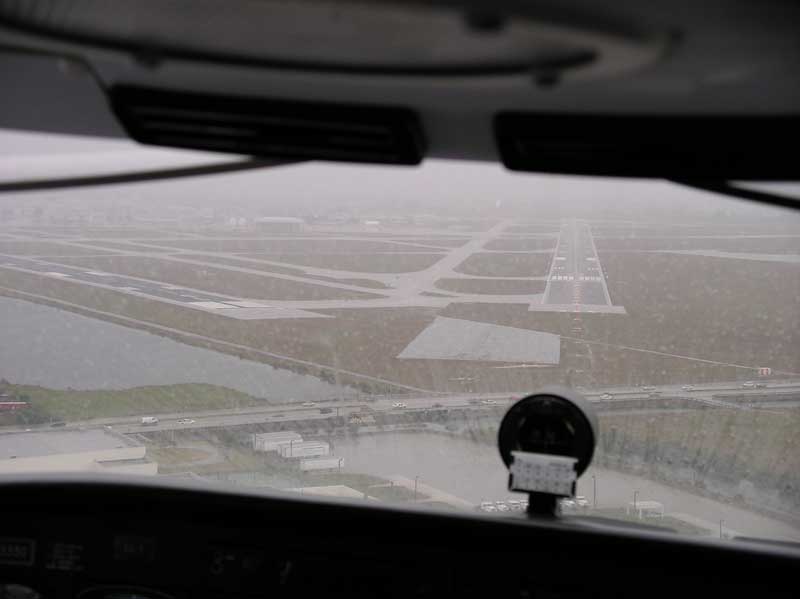
Riding the ILS on a pretty wet day.

We flew to Monticello, New York today. It was a wet flight, and it's raining non-stop here. The news people are talking about floods and tornados and more floods and I'm glad we are already safe on the ground, though I should probably get a room on the second floor of the hotel, just in case.

The flight was fine except that the FBO in North Carolina didn't have any bags of ice to put into the various coolers I have on board the airplane for passenger drinks. Stuff like that sounds really minor and stupid, but it's also stuff the passengers are used to, and when it's not there, they notice. They pay crazy amounts of money to fly a private jet, so I feel bad when I can't get the plane set up exactly how they want it. Normally it's not a problem because we travel to large airports where it's easy to get all the goodies the passengers want, but at smaller airports the infrastructure just isn't there, so sometimes we can't get fresh coffee or newspapers or decent catering or boiling water for tea or whatever, and even though it's out of my control, I worry that it looks bad on me.

More pilot geek stuff:

The weather at our destination, Sullivan County, wasn't very good at all. Nothing scary, just a few bumps, lots of rain and low clouds, which make it hard to see the runway. The first time the air traffic controller lined us up for the airport he totally screwed it up and we ended up over the airport at like 5,000' above ground, which is about a mile too high to successfully land the airplane. I think he was distracted with lots of other airplanes who needed to divert around some thunderstorms west of us, but it was still a pain, especially when our direct operating cost is around 30 bucks a minute to run the jet. So we went around and he paid a little more attention and vectored us back for a second approach, which worked out fine.

We broke out a few hundred feet above minimums on the ILS approach into our arrival airport this morning, which was pretty neat. The ILS approach system has been installed for decades at many large airports, and provides a reliable way to attempt a landing in low visibilties and bad weather. An ILS approach is a relatively precise radio aid that lets us line up for a landing straight down the runway, and also tells us if we are descending on the correct slope to land on the runway and not in the trees before or after the runway. On an ILS approach we can use our instruments to get to within 200' of the runway while still being in cloud. At 200', we look up and if we see something that identifies itself as a runway (for example: runway lights, the runway itself, or other visual clues that it's an airport and not a corn field or a mountainside), then we land. If we still don't see the runway at 200' above ground, we push the throttles forward and climb back up into the sky. 200' above ground translates into about 10 seconds from landing, so it really is close. Some of the more modern airliners can have their autopilots fly the airplane right down to the runway, but we don't have that luxury as the equipment required for an airplane to do that is very expensive, and it's limited to only a few of the largest airports.

Anyway, we flew in the rain and cloud and muck right up intil the last few seconds, when we broke out beneath the cloud layer and saw the runway in front of us. I have flown ILS landings a bajillion times but it still amazes me that the system works so damn well. Future systems will use GPS navigation to provide very precise landings in bad weather at almost every airport, but until then the venerable ILS system will be the workhorse of bad-weather landings.

After we landed my pax scurried into the FBO while I soaked myself getting their bags out of the plane. I came to the hotel, had a good soak in the pool and a run on the treadmill, then made up for it with a chocolate milkshake. Life is good.

Monday, August 28, 2006

Today. Wake up at 4am. Whimper quietly. Shower. At 5am, report to the Landmark at the north end of Pearson. Get the plane ready. Fly to Atlanta, Georgia. Listen to Tool and Stevie Ray Vaughn while watching the earth rotate. Realize my job is pretty nifty. Land in Atlanta, grease the landing. Taxi into the Signature FBO there to clear customs. Leave 3 minutes later, after being charged a $275 handling fee despite not using any of their services. Lay 6 different curses on the money-grubbing bastards, then depart. Fly to Panama City, Florida. Land in Panama City, not such a great landing. It's 33 degrees outside, dewpoint is 32. Sweat profusely. Deal with the semi-retarded FBO person who takes 10 minutes to swipe the fuel card, finally figuring out that the magnetic strip was the wrong way - and this person operates that machine daily. Borrow the courtesy vehicle - it's a Cadillac with chrome rims and a radio that only tunes to a rap music station. Crank the volume and pretend to be a gangsta. Go to a local grocery store for sandwiches and snacks, get some submarine sandwiches from a guy with a shaved head and 3 lips rings. He's wearing a hair-net. Wonder if making bald people wear hair nets is a subtle form of discrimination. Passengers arrive an hour early, scramble to get the plane ready and it all comes together just in time. New passenger has a lazy eye, but it's not a crossed eye, it looks outward, like a chameleon. Tell him the safety briefing while looking at the floor. Fly to Grenada, Mississippi. Land, grease the landing. It's 32 degrees outside, dewpoint is 32. Sweat even more. Think about bringing a towel for the next trip. Land and talk to the airport guy who is clearly lonely, and unfortunately very boring. He pulls out an atlas and tells me every place he has visited, and what the land is like there "Oregon, now that's a nice place. And California is nice. And the woods in Kentucky are nice. Maine is nice." I pray for the angel of death to come down and give one of us (him or myself, after a while it doesn't matter) sweet, sweet release. Passengers arrive a half-hour late. Load up and fly from Mississipi to Elizabeth City, North Carolina. Dodge thunderstorms for the first 500 miles, then drink a Red Bull so I'm awake for the landing, 12 hours into the day. Land. Nothing special w. the landing, neither great nor poor. Turn off the AC and exit the plane. It's cooler here, only 31 with a dewpoint of 26. Soak through my shirt in seconds while unloading the pax baggage. Decide to definitely bring along a towel on the next trip. Put the plane to bed. I add a quart of oil to each engine, and spill a whole pile down the front of my shirt, which blends with my sweat to create an unholy marinade. Call a cab and check into the Hampton Inn. Wander across the street to Ruby Tuesdays, order a beer, some ribs, and another beer. Eat and drink it all in 15 minutes. Waddle back to the hotel and write this, just before bed. It was a long day, but a good day. the baby jet behaved, and nobody got scared. More tomorrow.

Sunday, August 27, 2006

I'm flying for the next 7 days straight, so tonight it's all about the laundry. I pack pretty light - a pair of underwear and socks for each day, then 2 more spare ones, a couple of pairs of pants, and a few shirts. Some deodorant and my fang brush, and I'm set. Packing for flights was always kind of a pain until a few years ago, when I was visiting my mom in BC. I took a floatplane from Vancouver to Nanaimo and when I disembarked at Nanaimo, one of the owners of the floatplane told us her secret to packing - she rolls all her clothes rather than folding them. It actually works, you don't get fold lines on your shirts and pants when you unpack them. Feel free to check it out yourself, and if it works for you then maybe send me five bucks or something.

I have been watching the news today about the Comair RJ that crashed in Kentucky this morning, killing 49 people and leaving the only survivor, the first officer, in critical condition. It appears they mistook the proper runway for one that was half the length, and went off the end of the short runway at high speed, then crashed and burned. What can I say except I hope that's not the case; it would be such a senseless waste of life if it were. Most pre-takeoff checklists in aircraft have an item that goes something like this "When on runway, check heading". Barring a mechanical failure of the airplane's heading indicators, the crew should have noticed that their heading indicator was 40 degrees from where it should be. Maybe the control tower should have seen them start to take off on the wrong runway in time to get them to reject the takeoff. The runway layout at Bluegrass in Kentucky is a confusing one, and it there have been previous incidents where crews nearly took off on the wrong one. Other reoprts indicate the crew was on a stand-up duty day, which means they started their duty day the previous night, flew to Kentucky, then spent a few hours in a hotel while continuing to be technically on duty, then were about to fly home to finish off their day. Long story short: if that was the case, then fatigue might have been a factor. Again, it's links in the chain. Fatigue, not noticing the runway heading, the tower not paying attention, the confusing layout of the airport; there are 4 right there. Anyway, my heart goes out to the loved ones of the people involved in the accident, it's an awful situation.

The dryer just buzzed so I'm off to bed now; I have a 4:30am alarm for a 5:30am duty day start. Tomorrow it's Atlanta GA, then Panama City FL, then somewhere in Mississippi, then somewhere in North Carolina. If everything goes according to plan, we should be done the first day in 14 hours and 50 minutes, so I'm really hoping the plane and the weather are kind tomorrow, otherwise I'll end up stuck in Mississippi or Georgia, or heaven forbid, Florida. I don't know what it is, but Florida seems to be where IQ's go to die, and I need all the remaining IQ points I have.

Saturday, August 26, 2006


Today's stories are about rats and politicians. One group has better manners, as I found out a while back.

5 or 6 years ago, back when he was Minister of Finance and before he became Prime Minister, I flew Paul Martin about the province, taking him to a few different fundraisers around Ontario and then back home in the evening.

I met him at the Toronto Island airport; we were going to Ottawa first and I figured I'd give him a quick briefing.

Me - "Hello, Mr. Martin, good to see you. The aircraft is ready, and the weather is great all the way to Ottawa. The flight will be about 40 minutes."
Him - (pause)(icy stare)
Him - "I'd PREFER to be called MINISTER Martin"

It took a physical effort on my part not to bitch-slap him. Needless to say, even though the weather was fine, it was a pretty bumpy flight on that first leg, and the subsequent ones weren't much better.

The best part was at the end of the day when we landed at his home airport. As he was exiting the aircraft, he leaned over and a stick of deodorant fell from his suit onto the ramp and cracked open. He went from being the guy who decided how we as a country spend money to being just a sweaty little man in a suit. I stood there and watched while he gathered up his deodorant bits, and we silently walked into to the FBO. I said goodbye without calling him anything, and went on my way, my heart a little lighter.

Shortly after that, the company I flew a Cessna 441 Conquest II for got a 1-time contract to deliver some albino lab rats from the rat farm to a university about 600 miles away. The stuff I didn't even know existed....just-in-time rat delivery...perhaps charter outfits should focus more on that in their marketing plans...

Anyway, The rats came to us in these large heavy cardboard boxes, with little air holes punched in the sides so they didn't pass their expiration date too quickly. This was the first time they had been shipped this way, and we thought the best thing to do for their comfort was to take some seats outta the back, and put the cases in the cabin, so they'd be nice and warm, and pressurized.

About an hour into the flight, with an hour left to go, I saw one of the little buggers calmly walk up the aisle and start investigating the right-seat rudder pedals. Then another. And another. I was single-pilot, the rats not requesting a F/o for the trip, so I was pretty much stuck in my seat. They had chewed on the airholes until they could get out of the box, and were certainly keen on investigating every nook and cranny of the 441. By the time I landed, there were almost a hundred of them throughout the airplane. You shoulda seen the look of the delivery guy when I opened the door after we landed. I was laughing so hard I had to sit down several times during the hours-long rat-catching that followed.

Speaking of looks, there was an equally priceless look on the boss's face when I got home and told him we were gonna have to completely clean out the aircraft, just in case there were still a few stowaways. It was after my thunderstorm incident so I didn't feel particularly guilty about giving the plane back to the boss, soiled. I was told the maintenance guys found about a dozen rats in the tail later that night. I can only assume they were set free in a nearby meadow, to live out their lives in peace and freedom. The rats, not the mechanics ;)

It's worth noting that the rats were very polite during the entire trip. A politician could learn something or two from that, I think.