Friday, September 01, 2006

I flew to Teterboro, New Jersey yesterday, taking one of the bosses and his friends/family to the US Open. Teterboro is about half an hour away from downtown New York. I am staying at the Marriott in Secaucus, New Jersey. It's decent enough. There's a bus across the street that takes me directly to Grand Central Station in Manhattan for $5 return. The trip takes 20 minutes and then I'm right in the thick of things.

We go back on Sunday afternoon, so I'm gonna spend some time wandering around Manhattan. Hopefully tropical storm Ernesto won't be a big deal on Sunday. Hopefully.

Here are a few pics. I'm certainly lack Brian's skills (he did the airplane pics featured in yesterday's post) but hopefully you can see some of what I saw.

That's a definite perk to this job - I get to travel to some fairly fun places.

First a crappy video from my camera - yeah I know the resolution sucks. Then some pics, taken at a much higher resolution.


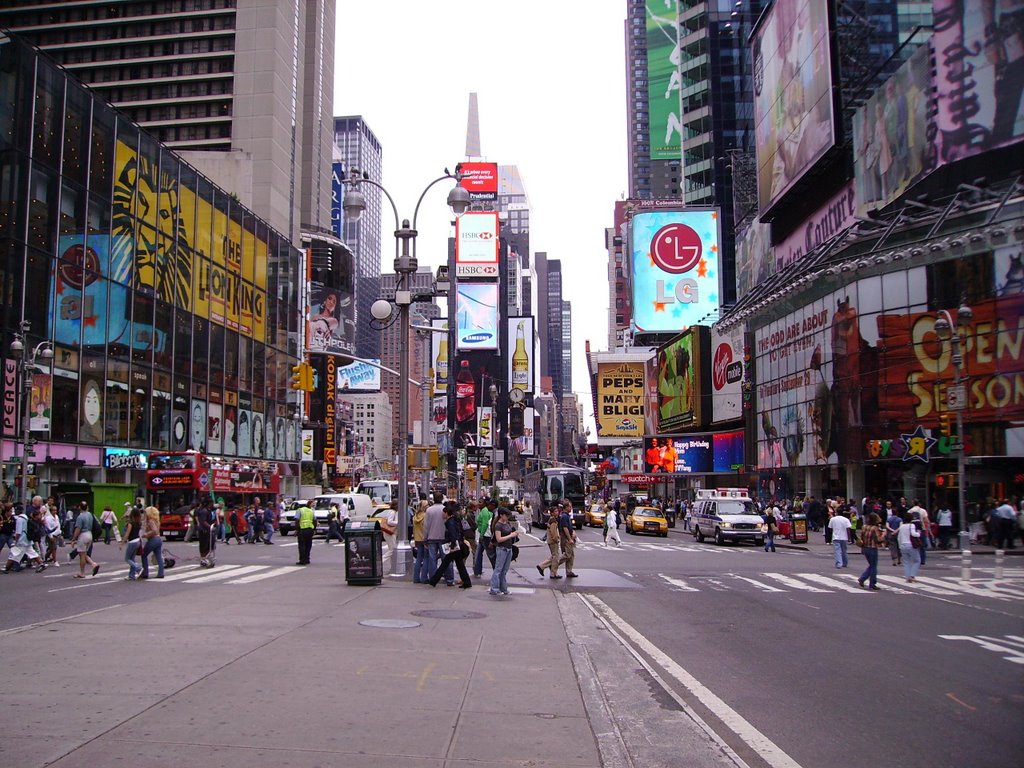
The view from Times Square


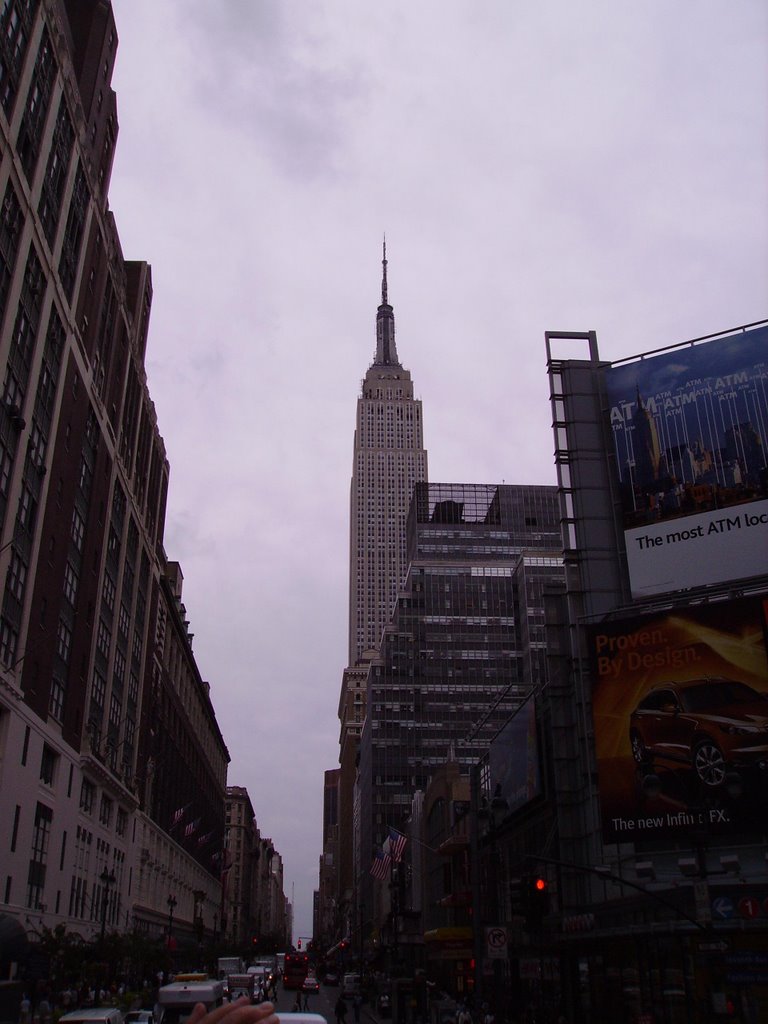
The Empire State building. You can take an elevator to the 102nd floor for $16, but it's about a 4-hour wait in line.


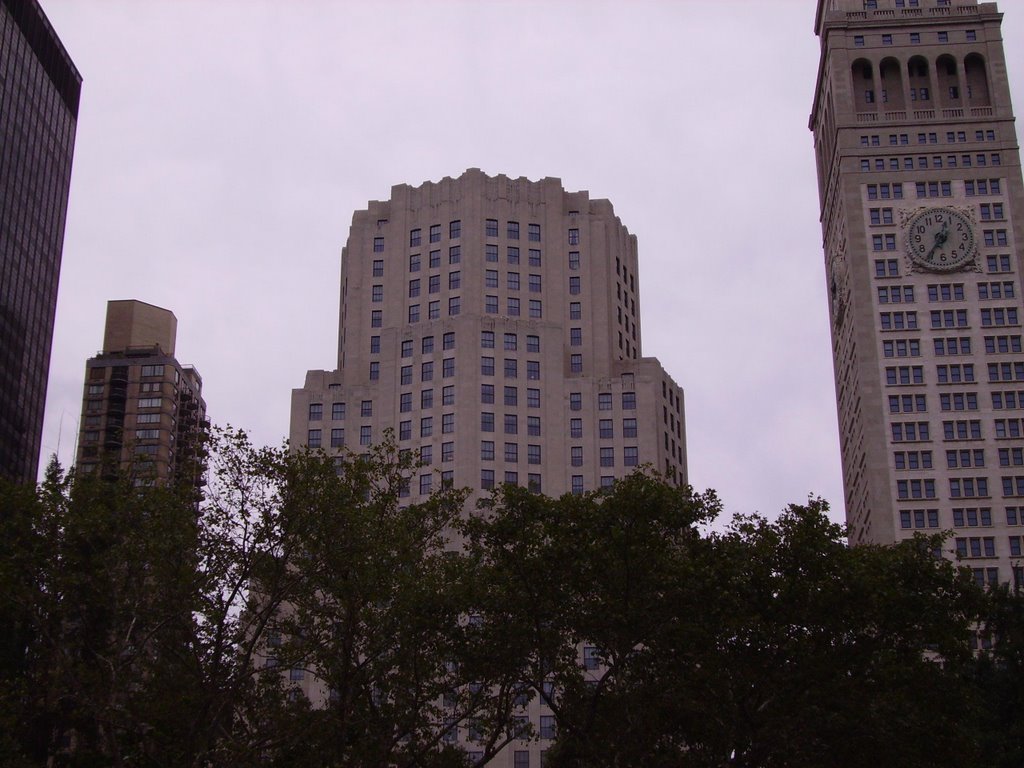
When this building was going up, the builders ran out of money and threw a roof on the floor they had just completed. That's why it looks half-finished, 'cause it was.


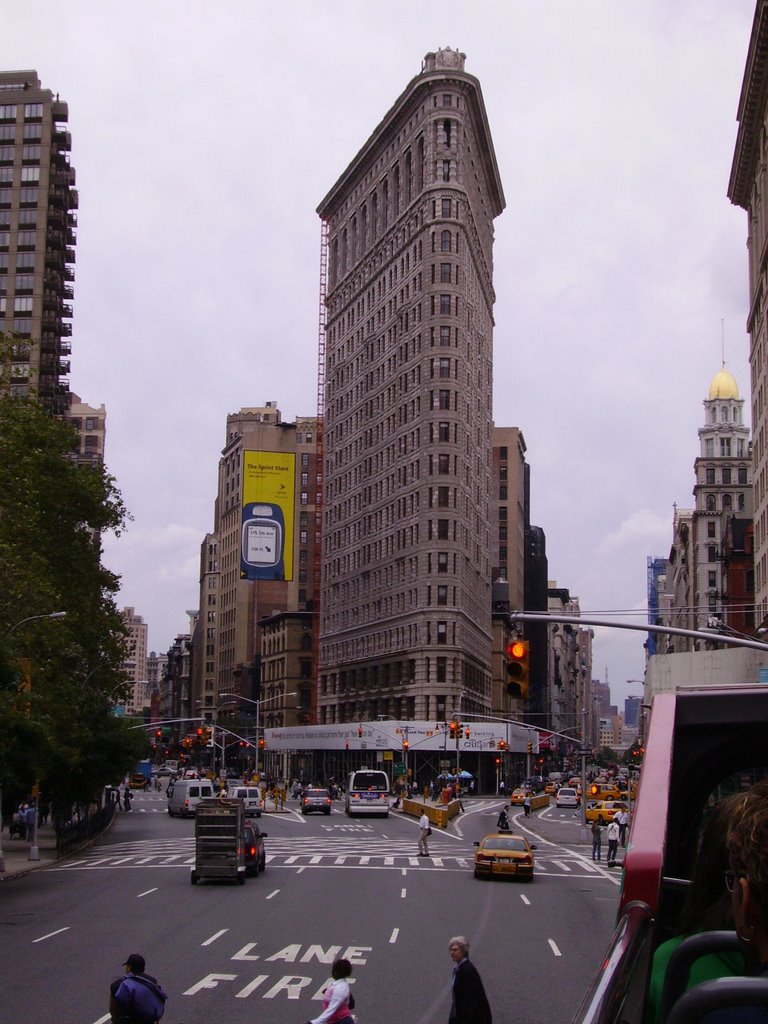
This building occupies a wedge of land. It's only 6 feet wide at it's most narrow point. In Manhattan, every inch of space is being used for something.


This was across from Ground Zero. There are piles of messages on this fence, looking for lost loved ones. Ground zero itself is just a big hole, but for some reason there are high fences around all of it so it's really hard to see the hole.

And then my batteries died, so that's it. That'll teach me not to bring spares.

I bought some rechargeable batteries for tomorrow.

Thursday, August 31, 2006

All these were taken by a friend of mine, Kitsch. He is a pilot also, and he sure knows his way around a camera. All credit goes to him for these great pics. If you want him to do your birthday or wedding or whatever, email me and I'll hook you up.

Click on the pics to make 'em bigger.


Our fine 550 sitting at the brand new Landmark hangar at the north end of Pearson last Sunday.

Today we are gonna see some more pics of one of my beloved 550's. The other plane was out flying the day these were taken so you'll have to wait for those ones.

She is a hard-working, good-natured airplane.


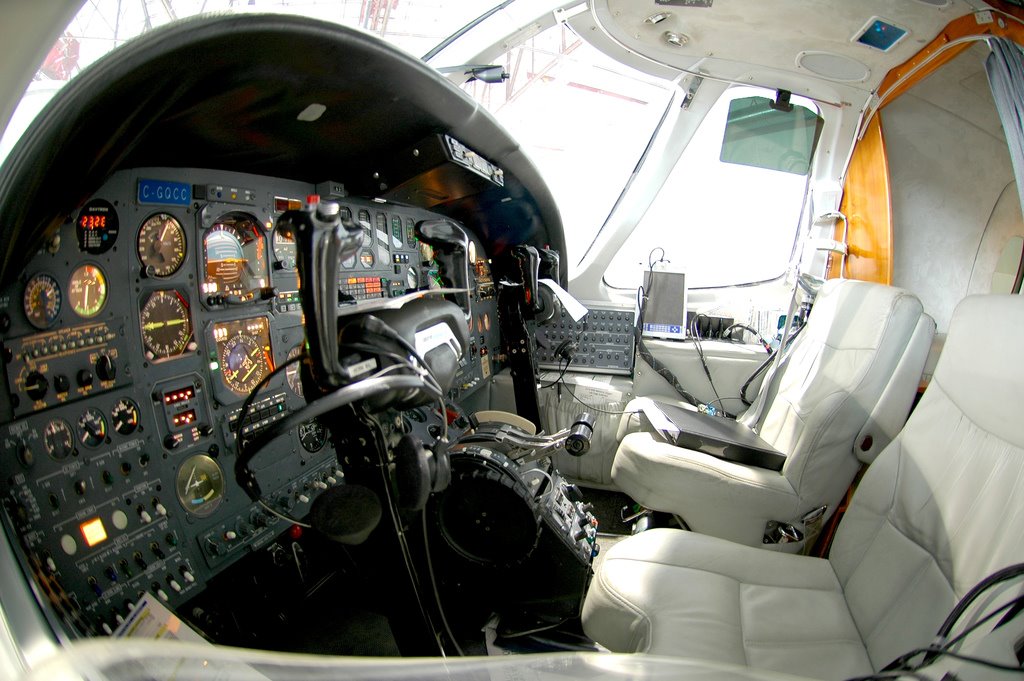
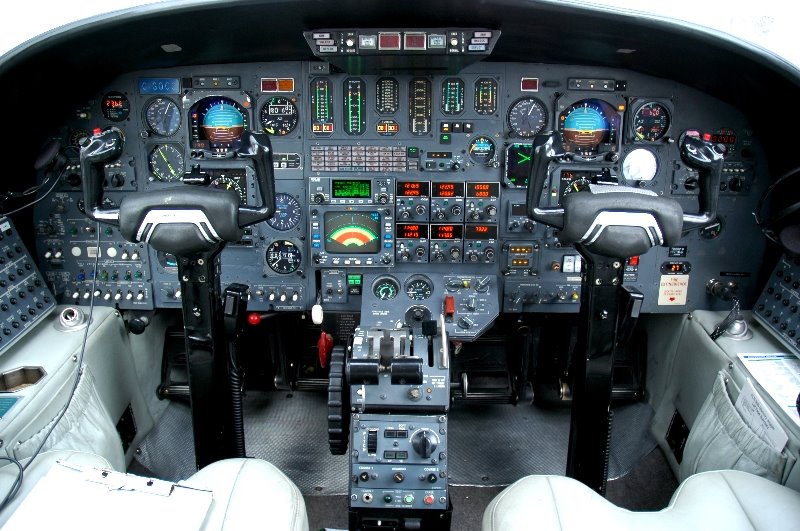
Old-school instruments. You can see the tablet PC that I was babbling about in previous posts, it's up against the copilot's window. We see satellite weather and can put approach plates on it with the aircraft overlaid on the approach plate. The plane just came out of inspection, so we hadn't hidden the wires to the tablet yet and it was a bit ugly until we did.

Note the little tiny headsets. They are noise-cancelling too, which is a nice bonus. Unless the batteries wear out and I forgot to buy new ones and the boss arches his eyebrow and I know I have done wrong.


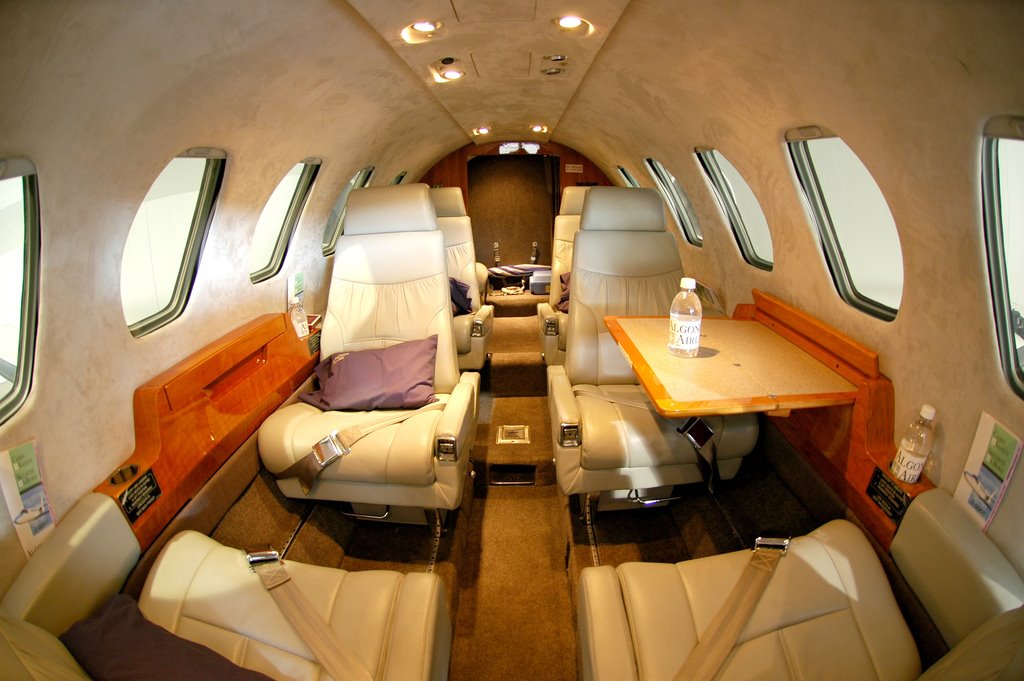
Inside the laquered cabinets are snacks, a whole lot of booze, more snacks, coffee, hot water for tea, pop and juice, cups, plates, more booze, and some other stuff that I can't remember right now. The sideways facing divan (apparently a fancy word for 'couch') can seat 2 people.


Facing the rear of the aircraft, we can see the potty area in the distance. Nobody seems to use the potty even though it's fully functional, so we mostly use that area to store laptops and excess baggage, along with a large cooler full of beer, juice, water and wine.

We represent awesomeness, so we have our logo on our own bottled water, pillows, blankets, etc. Kind of geeky, but kind of awesome at the same time.

Wednesday, August 30, 2006

The flight home from New York was good, the weather is beautiful in Toronto today. The passengers were happy, and I really have nothing to report.

Tomorrow, I'm heading back to New York city for 4 days, so I'm gonna tour Manhattan and buy some dodgy fake Rolex watches, maybe a handgun or two, and of course some crack. Kidding, kidding, I'd never buy a handgun.

Anyway, pilot geek stuff coming right up:

Suck, Squeeze, Bang, Blow.

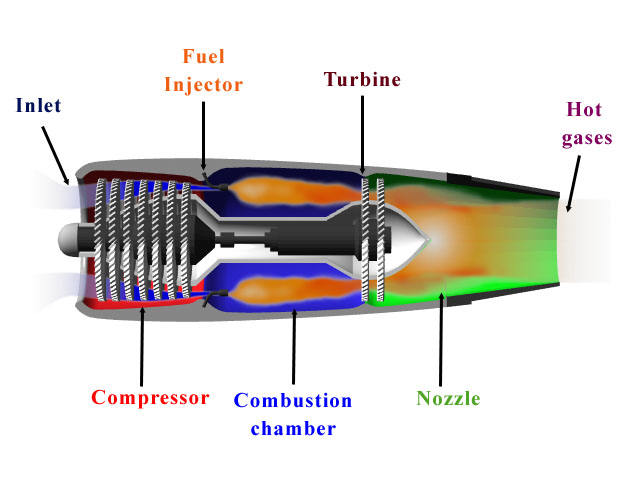
No, that's not what you think it means at all, it's how engines operate, whether they be piston or turbine. Today I'm bored, so I'll quickly run through how a turbine engine works. It's pretty simple, and it won't take long.

At it's most basic : compress some air, add fuel and ignite it. The expanding hot gases are channeled out the back of the engine, pushing the engine forward. The engine is attached to the airplane, so the airplane is pushed forward.


Click on this to make it bigger


At the front of a jet engine is a fan (called a compressor) that spins at a very high speed - our jet engine compressors spin at around 35,000 rpm in normal flight. When air enters the engine, the spinning fan blows the air into a small chamber. This compresses the air, hence the name. In the small chamber, the air combines with fuel and the fuel/air mixture is ignited, causing the air to greatly expand. The expanding air rushes out toward the back end, but in order for it to get out the rear of the engine, it has to run through a pinwheel (called a turbine) in the back, causing the pinwheel to spin. After going through the pinwheel, it shoots out the back of the engine, and that pushes the engine forward. We call this thrust. What does the pinwheel near the back of the engine do? Well, the pinwheel in the back is linked to the fan at the front, so spinning the pinwheel causes the fan to spin, which compresses the air which goes through the engine which burns and shoots out the back, spinning the pinwheel, causing the front fan to spin and so on and so on in an endless cycle.

There are 2 basic types of applications of turbine engines in aviation - turboprops, and jets. A turboprop is essentially a plane that uses jet engines to spin propellors, while a pure jet dispenses with propellors entirely, using the thrust of the air out the back of the engine to move the plane forward.

In a turboprop airplane, the pinwheel also spins the propellors, which takes up most of the energy of the air rushing out the back. The thrust out the back of a turboprop is generally a small part of the total power produced - I think in the last turboprop I flew - the MU-2 - for engines that were over 700 horsepower each, the residual thrust each engine produced was only like 50 pounds, the majority of the power was as a result of the spinning propellors. In a jet, there are no props to spin, so the air blowing out the back of the engine makes up all the thrust.

The reason most turbine airplanes fly high up in the air is because the air is generally colder at a high altitude. When the air is cold, the air molecules huddle closer together and that provides greater expansion when the air/fuel mixture is ignited in the engine, which helps increase the efficiency of the engine. Above a certain altitude, say around 35,000', the air stops getting colder so most aircraft don't bother climbing up higher than that because the engine efficiency stops getting much better above that altitude. Most turbine engines run on jet fuel, which is essentially kerosene. That being said, if we are in a pinch we can run our turbine engine safely on just about any kind of gasoline with a few restrictions and as long as we don't run it for very many hours before replacing the fuel with real jet fuel.

Turbine engines are very reliable and actually really easy to operate - you run the engine faster to produce more power (subject to temperature and rpm limitations - you don't want to melt the engine or overspeed it but that's generally not easy to do accidentally). They are very light for the amount of power they produce, and a jet engine can easily put out far more power than a piston engine of the same size. They do cost a hell of a lot of money though - a new engine for our jet can run around half a million dollars and a single engine for a large passenger airplane can easily run to ten million dollars or more.

I went to flight school for 2 years to learn that, and now you know it all for free in about 2 minutes :D

Tuesday, August 29, 2006


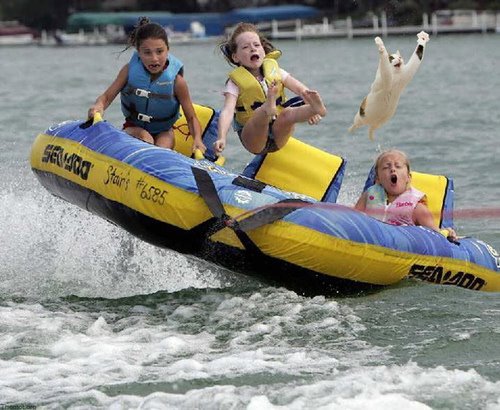
When I get a cat I'm totally taking it innertubing.

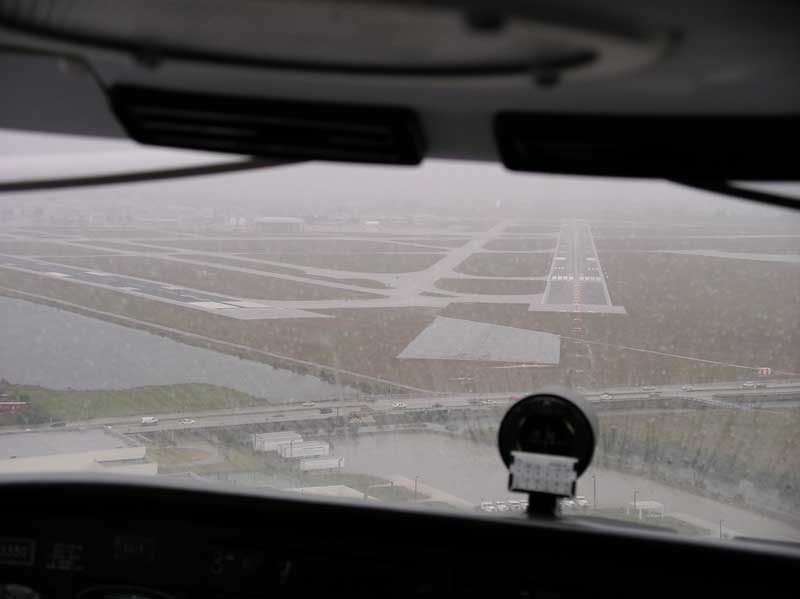
Riding the ILS on a pretty wet day.

We flew to Monticello, New York today. It was a wet flight, and it's raining non-stop here. The news people are talking about floods and tornados and more floods and I'm glad we are already safe on the ground, though I should probably get a room on the second floor of the hotel, just in case.

The flight was fine except that the FBO in North Carolina didn't have any bags of ice to put into the various coolers I have on board the airplane for passenger drinks. Stuff like that sounds really minor and stupid, but it's also stuff the passengers are used to, and when it's not there, they notice. They pay crazy amounts of money to fly a private jet, so I feel bad when I can't get the plane set up exactly how they want it. Normally it's not a problem because we travel to large airports where it's easy to get all the goodies the passengers want, but at smaller airports the infrastructure just isn't there, so sometimes we can't get fresh coffee or newspapers or decent catering or boiling water for tea or whatever, and even though it's out of my control, I worry that it looks bad on me.

More pilot geek stuff:

The weather at our destination, Sullivan County, wasn't very good at all. Nothing scary, just a few bumps, lots of rain and low clouds, which make it hard to see the runway. The first time the air traffic controller lined us up for the airport he totally screwed it up and we ended up over the airport at like 5,000' above ground, which is about a mile too high to successfully land the airplane. I think he was distracted with lots of other airplanes who needed to divert around some thunderstorms west of us, but it was still a pain, especially when our direct operating cost is around 30 bucks a minute to run the jet. So we went around and he paid a little more attention and vectored us back for a second approach, which worked out fine.

We broke out a few hundred feet above minimums on the ILS approach into our arrival airport this morning, which was pretty neat. The ILS approach system has been installed for decades at many large airports, and provides a reliable way to attempt a landing in low visibilties and bad weather. An ILS approach is a relatively precise radio aid that lets us line up for a landing straight down the runway, and also tells us if we are descending on the correct slope to land on the runway and not in the trees before or after the runway. On an ILS approach we can use our instruments to get to within 200' of the runway while still being in cloud. At 200', we look up and if we see something that identifies itself as a runway (for example: runway lights, the runway itself, or other visual clues that it's an airport and not a corn field or a mountainside), then we land. If we still don't see the runway at 200' above ground, we push the throttles forward and climb back up into the sky. 200' above ground translates into about 10 seconds from landing, so it really is close. Some of the more modern airliners can have their autopilots fly the airplane right down to the runway, but we don't have that luxury as the equipment required for an airplane to do that is very expensive, and it's limited to only a few of the largest airports.

Anyway, we flew in the rain and cloud and muck right up intil the last few seconds, when we broke out beneath the cloud layer and saw the runway in front of us. I have flown ILS landings a bajillion times but it still amazes me that the system works so damn well. Future systems will use GPS navigation to provide very precise landings in bad weather at almost every airport, but until then the venerable ILS system will be the workhorse of bad-weather landings.

After we landed my pax scurried into the FBO while I soaked myself getting their bags out of the plane. I came to the hotel, had a good soak in the pool and a run on the treadmill, then made up for it with a chocolate milkshake. Life is good.

Monday, August 28, 2006

Today. Wake up at 4am. Whimper quietly. Shower. At 5am, report to the Landmark at the north end of Pearson. Get the plane ready. Fly to Atlanta, Georgia. Listen to Tool and Stevie Ray Vaughn while watching the earth rotate. Realize my job is pretty nifty. Land in Atlanta, grease the landing. Taxi into the Signature FBO there to clear customs. Leave 3 minutes later, after being charged a $275 handling fee despite not using any of their services. Lay 6 different curses on the money-grubbing bastards, then depart. Fly to Panama City, Florida. Land in Panama City, not such a great landing. It's 33 degrees outside, dewpoint is 32. Sweat profusely. Deal with the semi-retarded FBO person who takes 10 minutes to swipe the fuel card, finally figuring out that the magnetic strip was the wrong way - and this person operates that machine daily. Borrow the courtesy vehicle - it's a Cadillac with chrome rims and a radio that only tunes to a rap music station. Crank the volume and pretend to be a gangsta. Go to a local grocery store for sandwiches and snacks, get some submarine sandwiches from a guy with a shaved head and 3 lips rings. He's wearing a hair-net. Wonder if making bald people wear hair nets is a subtle form of discrimination. Passengers arrive an hour early, scramble to get the plane ready and it all comes together just in time. New passenger has a lazy eye, but it's not a crossed eye, it looks outward, like a chameleon. Tell him the safety briefing while looking at the floor. Fly to Grenada, Mississippi. Land, grease the landing. It's 32 degrees outside, dewpoint is 32. Sweat even more. Think about bringing a towel for the next trip. Land and talk to the airport guy who is clearly lonely, and unfortunately very boring. He pulls out an atlas and tells me every place he has visited, and what the land is like there "Oregon, now that's a nice place. And California is nice. And the woods in Kentucky are nice. Maine is nice." I pray for the angel of death to come down and give one of us (him or myself, after a while it doesn't matter) sweet, sweet release. Passengers arrive a half-hour late. Load up and fly from Mississipi to Elizabeth City, North Carolina. Dodge thunderstorms for the first 500 miles, then drink a Red Bull so I'm awake for the landing, 12 hours into the day. Land. Nothing special w. the landing, neither great nor poor. Turn off the AC and exit the plane. It's cooler here, only 31 with a dewpoint of 26. Soak through my shirt in seconds while unloading the pax baggage. Decide to definitely bring along a towel on the next trip. Put the plane to bed. I add a quart of oil to each engine, and spill a whole pile down the front of my shirt, which blends with my sweat to create an unholy marinade. Call a cab and check into the Hampton Inn. Wander across the street to Ruby Tuesdays, order a beer, some ribs, and another beer. Eat and drink it all in 15 minutes. Waddle back to the hotel and write this, just before bed. It was a long day, but a good day. the baby jet behaved, and nobody got scared. More tomorrow.

Sunday, August 27, 2006

I'm flying for the next 7 days straight, so tonight it's all about the laundry. I pack pretty light - a pair of underwear and socks for each day, then 2 more spare ones, a couple of pairs of pants, and a few shirts. Some deodorant and my fang brush, and I'm set. Packing for flights was always kind of a pain until a few years ago, when I was visiting my mom in BC. I took a floatplane from Vancouver to Nanaimo and when I disembarked at Nanaimo, one of the owners of the floatplane told us her secret to packing - she rolls all her clothes rather than folding them. It actually works, you don't get fold lines on your shirts and pants when you unpack them. Feel free to check it out yourself, and if it works for you then maybe send me five bucks or something.

I have been watching the news today about the Comair RJ that crashed in Kentucky this morning, killing 49 people and leaving the only survivor, the first officer, in critical condition. It appears they mistook the proper runway for one that was half the length, and went off the end of the short runway at high speed, then crashed and burned. What can I say except I hope that's not the case; it would be such a senseless waste of life if it were. Most pre-takeoff checklists in aircraft have an item that goes something like this "When on runway, check heading". Barring a mechanical failure of the airplane's heading indicators, the crew should have noticed that their heading indicator was 40 degrees from where it should be. Maybe the control tower should have seen them start to take off on the wrong runway in time to get them to reject the takeoff. The runway layout at Bluegrass in Kentucky is a confusing one, and it there have been previous incidents where crews nearly took off on the wrong one. Other reoprts indicate the crew was on a stand-up duty day, which means they started their duty day the previous night, flew to Kentucky, then spent a few hours in a hotel while continuing to be technically on duty, then were about to fly home to finish off their day. Long story short: if that was the case, then fatigue might have been a factor. Again, it's links in the chain. Fatigue, not noticing the runway heading, the tower not paying attention, the confusing layout of the airport; there are 4 right there. Anyway, my heart goes out to the loved ones of the people involved in the accident, it's an awful situation.

The dryer just buzzed so I'm off to bed now; I have a 4:30am alarm for a 5:30am duty day start. Tomorrow it's Atlanta GA, then Panama City FL, then somewhere in Mississippi, then somewhere in North Carolina. If everything goes according to plan, we should be done the first day in 14 hours and 50 minutes, so I'm really hoping the plane and the weather are kind tomorrow, otherwise I'll end up stuck in Mississippi or Georgia, or heaven forbid, Florida. I don't know what it is, but Florida seems to be where IQ's go to die, and I need all the remaining IQ points I have.

Saturday, August 26, 2006


Today's stories are about rats and politicians. One group has better manners, as I found out a while back.

5 or 6 years ago, back when he was Minister of Finance and before he became Prime Minister, I flew Paul Martin about the province, taking him to a few different fundraisers around Ontario and then back home in the evening.

I met him at the Toronto Island airport; we were going to Ottawa first and I figured I'd give him a quick briefing.

Me - "Hello, Mr. Martin, good to see you. The aircraft is ready, and the weather is great all the way to Ottawa. The flight will be about 40 minutes."
Him - (pause)(icy stare)
Him - "I'd PREFER to be called MINISTER Martin"

It took a physical effort on my part not to bitch-slap him. Needless to say, even though the weather was fine, it was a pretty bumpy flight on that first leg, and the subsequent ones weren't much better.

The best part was at the end of the day when we landed at his home airport. As he was exiting the aircraft, he leaned over and a stick of deodorant fell from his suit onto the ramp and cracked open. He went from being the guy who decided how we as a country spend money to being just a sweaty little man in a suit. I stood there and watched while he gathered up his deodorant bits, and we silently walked into to the FBO. I said goodbye without calling him anything, and went on my way, my heart a little lighter.

Shortly after that, the company I flew a Cessna 441 Conquest II for got a 1-time contract to deliver some albino lab rats from the rat farm to a university about 600 miles away. The stuff I didn't even know existed....just-in-time rat delivery...perhaps charter outfits should focus more on that in their marketing plans...

Anyway, The rats came to us in these large heavy cardboard boxes, with little air holes punched in the sides so they didn't pass their expiration date too quickly. This was the first time they had been shipped this way, and we thought the best thing to do for their comfort was to take some seats outta the back, and put the cases in the cabin, so they'd be nice and warm, and pressurized.

About an hour into the flight, with an hour left to go, I saw one of the little buggers calmly walk up the aisle and start investigating the right-seat rudder pedals. Then another. And another. I was single-pilot, the rats not requesting a F/o for the trip, so I was pretty much stuck in my seat. They had chewed on the airholes until they could get out of the box, and were certainly keen on investigating every nook and cranny of the 441. By the time I landed, there were almost a hundred of them throughout the airplane. You shoulda seen the look of the delivery guy when I opened the door after we landed. I was laughing so hard I had to sit down several times during the hours-long rat-catching that followed.

Speaking of looks, there was an equally priceless look on the boss's face when I got home and told him we were gonna have to completely clean out the aircraft, just in case there were still a few stowaways. It was after my thunderstorm incident so I didn't feel particularly guilty about giving the plane back to the boss, soiled. I was told the maintenance guys found about a dozen rats in the tail later that night. I can only assume they were set free in a nearby meadow, to live out their lives in peace and freedom. The rats, not the mechanics ;)

It's worth noting that the rats were very polite during the entire trip. A politician could learn something or two from that, I think.

Friday, August 25, 2006

Well yesterday was certainly fun. On Wednesday night we left Timmins and flew to Rouyn-Noranda for an overnight. It's just east of the Ontario/Quebec border, about a hundred miles from Timmins. Rouyn is a beautiful little town of 40,000 or so, very picturesque and quaint. It seems to be built on tourism and on a large industrial plant just north of the town, with smokestacks that tower above the town, belching out grey mist as soon as the sun goes down. Somehow it doesn't spoil the town though, and it really is a nice little place to visit. It's also very, very French. As in unilingually French. My fellow pilot and I had a truly hilarious experience trying to order food from a pub, mostly because we only knew like 5 words of French between the two of us, and our waitress didn't know a single word of English. For real, she works in the service industry in Canada and didn't know a single word. I know I sound like a white middle-class imperialist, but I mean really. With much pointing and acting and rubbing of tummies and laughter we eventually were able to communicate our food order, and what we got from the kitchen actually resembled what we ordered, so we were happy. Well, I asked for no croutons for my salad and instead got croutons and shrimp added but it turned out that the shrimp made the salad better, so I was happy. It got me thinking a little bit about the waitress - I wonder what her experience of Canada and life in general is, only speaking French in Canada. I was thinking she must miss out on a lot of things, but then again I probably do also by not being able to speak French. I took it for 8 years in school, and I know pamplemousse is grapefruit, but that's about it.

Anyway, on to the flying part. We noticed on the 20-minute hop from Rouyn to Timmins that we were getting some vibration on the right engine, which is very unusual for a jet and generally means expensive repairs are on the horizon. The vibration correlated to a spike in our right generator load-meter, so it looked like we had a sick generator that might not hold out very long. We have a generator on each engine and either one can provide enough juice for the airplane, but we can't fly with a dead one.

So yesterday, Thursday, we got to the airport a little early and fired up the right engine to see if the plane had healed itself. No such luck, there was still vibration from the right engine, and the right generator was still unable to maintain a steady load. Our next destination was a 45-minute flight to Montreal, then back home to Toronto later in the day. The weather yesterday was perfect, with just a scattered/broken layer around 6,000' and nothing else. We agreed that we'd limp to Montreal and get the generator looked at there.

So our pax arrived and we loaded up. It was my flying leg, so I hopped in the left seat while the other pilot gave the safety briefing and made sure our pax knew where their catering was. We fired up and headed out, but on the runway backtrack the dreaded yellow master caution came on and the right generator fail light came on. I tried to reset it, but it was dead.

Now here's where I earn my outrageous salary. Departing on one generator isn't technically allowed, but the weather was great all the way to Montreal and our remaining generator was more than capable of handing the electrical load. Our passengers were high-level business execs who had some serious business meetings in Montreal and if we stayed in Rouyn, they would not be able to make their meeting and would have to cancel. They were finalizing details of an $18 billion (yes, billion) dollar deal and any delay would be costly. There were good maintenance facilities in Montreal, and nothing in Rouyn. All we'd have to do was pretend we didn't see the light until we were airborne.

But there was that damned vibration on the right side accompanying the generator failure. And it didn't go away when I shut the generator down.

That could mean the generator shaft had broken and it was just waiting to fling metal pieces at high speed all around the engine gearbox. There are hydraulic lines and fuel lines and all sorts of expensive, necessary items in that area and a catastrophic failure would instantly make a routine flight turn into a very exciting flight.
Yup, I earned my outrageous salary by turning around, taxiing back to the ramp and shutting down. That's right, I took the legit path, I bet you weren't expecting that ;) Despite the incredible inconvenience, it wasn't worth the risk to take a sick airplane up into the sky. I told our passengers the story, and said we would work on getting them to Montreal as soon as we possibly could. I called Propair, who had a base in Rouyn and asked them if they had any planes nearby. They only had a medevac King Air and I doubted our passengers would want to be strapped into a stretcher for the flight, so that was out. I called Air Creebec and reached the voice mail of the charter coordinator who still hasn't called me back, so that was out. I talked to dispatch and they arranged to have one of the larger jets come rescue us, but it wouldn't be there until 3pm and our passengers had a meeting in Montreal at 2pm. Faced with that, our passengers elected to cancel the Montreal meeting, so they wanted to return to Toronto directly.

Now here's the cool part: Falconbridge mining has a 737 they use to haul workers from Rouyn to a mine in nothern Quebec, and it was due to return to Rouyn in a couple of hours, then head back to Toronto empty. Our passengers had business dealings with Falconbridge, so our dispatcher made a call and set it up for us - we would all fly home to Toronto on the corporate 737, letting the pax take a look at their own corporate aircraft, and saving thousands of dollars by not having one of the Bravo's sister jets make the trip from Toronto to Rouyn and back. There was no sense in us sitting and waiting for the Bravo to get fixed as dispatch said a new generator wouldn't be in for at least 2 days, so the mechanics wouldn't be up in Rouyn 'til the third day to fix the plane, assuming that the generator was in fact the problem.

We unloaded the Bravo and sat in the Rouyn terminal for a couple of hours until the 737 came back from the mine. It's a really cool beast - they call it the BBJ - Boeing Bush Jet. It's an older 37 with the cigar-shaped low-bypass engines that burn lots of gas and are loud, loud, loud. It has some unique features though, like a gravel kit that lets it go into gravel strips - there is a huge skid plate on the nose gear the prevents rocks from being thrown up into the fuselage, and on the front of each engine are 2 long metal tubes that extend a couple of feet forward of the engine, mounted underneath it. They blow powerful jets of compressed air straight down, which prevents gravel from being sucked up into the engines when they are on an inimproved strip. The belly has strengthened skin and paint also, and all the aircraft antennaes and lights have metal screens on them to prevent an errant rock from damaging them.


The 5 of us jumped on board and settled into the leather seats, very swanky indeed. My fellow pilot wanted to nap for the flight, so I begged for the jump seat and managed to snag it. It was pretty damn cool, watching the crew fly the 45-minute leg from Rouyn to Toronto. This 737 has a custom avionics package, totally unique to this aircraft. There are 2 EFIS tubes on each pilot's side, and a large one in the middle of the cockpit panel that has a digital map, showing airways, VFR charts, IFR charts, radar, whatever. The rest of the cockpit is old-school 737, with a bazillion switches and dials, so it really was an interesting mix of old and new technology. Because we were light going out of Rouyn they did a reduced-thrust takeoff, but we still hauled ass on takeoff; the f/o told me they have the highest-thrust engines you can get on an old series 737. Their SOP's were pretty much identical to the ones I use at my company, and that was neat to see. I won't have to learn a totally different way of flying should the gods smile down on me and grant me a job flying a huge jet. We flew uneventfully to Toronto, then set up for the visual approach and landed. They work 2 weeks on, 2 weeks off, and in summer their 2 weeks on translates into flying every single day, while in winter their 2 weeks on has just 2 scheduled runs per week. It looks like a pretty sweet job.The crew said they will probably have to get a second airplane to keep up with the planned expansion of the mine in Quebec, so I tactfully taped my resume to the cockpit door, just in case.

They taxiied to the north end, shut down and we disembarked. I thanked the crew, got my bags and headed to the car. Another day in the life.
Wednesday, August 23, 2006

I'm sitting in the Broadway Cafe in downtown Timmins, eating some lunch and writing this. The flight yesterday was uneventful, a one-hour hop up here from Toronto. I forgot that we were travelling 350 miles straight north, so I am a little underdressed, but other than that, life is good. I saw the old hangar I was based out of when I flew the MU-2 for Thunder, but nobody is left from those days so I didn't go in to chat. With the industry in an upswing, they are having a lot of turnover and that makes sense to me - flying medevac is one of the hardest jobs in aviation due to the pager and the random work hours, and the MU-2 itself is a handful to fly, so a lot of pilots have gone there and only flown for a few months before heading over to regional air carriers or other niches in aviation.

Tuesday, August 22, 2006

The next 3 days are a whole lot of hanging out and a little bit of flying. I'm doing a trip for some pals of mine who run a company in a nearby hangar. They have a Citation Bravo, which is the state-of-the-art version of the jet I fly now. It has tv screens in the cockpit instead of analogue dials and gauges, and it's a pretty sweet ride.

This is a pic of the cockpit of one of the Citation 550's I fly:


This is a pic of a Citation 550 Bravo, like the one I'll be flying today.


The airframe is the same, but the engines on the Bravo have a little more thrust, and of course the cockpit is updated a wee bit ;) That's apparently the difference between a 2 million dollar airplane and a 5 million dollar airplane. I love my plane, but the Bravo has definite ramp appeal.

The trip takes me about an hour across northeast Ontario to Timmins. Then tomorrow we fly 15 minutes from Timmins to Rouyn-Noranda, then on Thursday it's off to for a 40-minute flight to Montreal and finally back home to Toronto. Timmins and Rouyn-Noranda are small, but they have paved roads and high-speed internet, so it's all good.

I was based in Timmins for a while when I flew the MU-2 for Thunder Airlines in 2003-2004. It's a nice little town - very French, but nice. I'm already salivating at the thought of the Chinese restaurant that's just down the street from my hotel; I can smell the lemon chicken. //drools

The weather is good today, so everything should be routine. More to come in Timmins.

Monday, August 21, 2006

Part 4 of 4. Scroll down to read these in order so they make sense. This is not a feel-good story.

So what the hell happened? Why did VLH stop making engine sounds and then disappear behind the trees in a 60 degree banked turn?

The day after the crash when we were picking up the pieces of the airplane, Doug and I looked in the cockpit and there it was, staring us right in the face.

In the Cessna 185, the fuel selector is on the cabin floor, right between the 2 front seats. It's set up like a clock dial, with a single little lever. If you move the lever to the 9 o'clock position then it will feed from the LEFT tank. If you move it to the 12 o'clock position, then it will feed from BOTH tanks, and if you move it to the 3 o'clock position, it will feed the engine from the RIGHT tank.

Now here's the critical thing: This fuel selector is very similar to other Cessna fuel selectors. For example, in the Cessna 172, it's exactly the same thing, except that you can also slide the lever to the 6 o'clock position which is the fuel cutoff position - no fuel at all will be fed to the engine from either tank. In the 185, however, there is a piece of plastic that prevents the lever from moving south of the 9 o'clock or the 3 o'clock position, so you should only be able to select the left, right or both tanks for fuel.

In this particular 185, that was not the case. The plane had been rolled up into a ball a few years before, and while rebuilding it, the mechanics had used a fuel selector that had the fuel cutoff feature if you placed the needle at the 6 o'clock position. The piece of plastic that is supposed to prevent the fuel selector switch from being moved to the 6 o'clock OFF position was still there, but the mechanic had noticed that if you pull the lever straight up off the selector, you could wiggle it above the plastic piece and still pull it to the 6 o'clock OFF position. Again, none of this was mentioned in any airplane manual for VLH, and the mechanic later said he was the only person who knew about it.

He was also the mechanic who had done the last inspection on VLH, just before it took off on the final flight. He had been working on the fuel system and had moved the selector lever to the 6 o'clock OFF position to cut off fuel to the engine while he did some work on it. After the inspection was done, he had forgotten to move the fuel selector lever to the LEFT, BOTH, or RIGHT position, and it remained in the OFF position.

Unfortunately, even in the OFF position, there are a couple of gallons still in the fuel line between the fuel cutoff valve and the actual engine. In a Cessna 185, a couple of gallons is enough to do an engine run-up, taxi, take off, and get around 300 feet in the air before the gas runs out.

Because of the position of the selector switch between the two front seats on the floor, it's somewhat difficult to lean over and visually confirm the position. What we think happened is that when the checklist called for identifying the fuel tank selector switch position, Daryl put his hand between the seats and manually felt the lever. It was pointing to 6 o'clock OFF, but if he didn't know it could even point in that direction, he might have assumed it was pointing to the 12 o'clock BOTH position because the lever was in a vertical position, it was just pointing 180 degrees from where he expected it to be pointing.

In any event, he took off with the fuel selector in the OFF position. He got 300' in the air, and the engine stopped dead. This is a hard part to figure out, 'cause one of the basic things they teach in flight school is that if you engine quits and you are low to the ground, say below 500', you NEVER try to make a 180 degree turn, you land straight ahead. Daryl went for the turn. Why?

Now it's also important to know that the direction Daryl took off in was facing the rapids of Stony Rapids. We think that he saw the white water in front of him after the engine failed, and tried to make a 180 degree turn back to the safe part of the river, which would have saved the plane from flipping over in the rapids. At 300' up, he wasn't nearly high enough to accomplish that, and he hit the shoreline in the turn.

To summarize:

1. A Modification to airplane fuel system without anyone but the mechanic knowing
2. The fuel selector was left in the OFF position after inspection
3. Daryl failed to physically check position of the fuel selector, or misread it
4. There was enough fuel in gascolator line to get airborne to 300'
5. Daryl attempted to make a 180 degree turn at low altitude

So it took 5 distinct actions to cause this accident, maybe more. I have listened to many Transport Canada presentations on safety, and they all hammer home one basic thing: An accident is the result of many links in the accident chain, it's never just one thing. And this was a classic case of exactly that. If any of the following links had been broken, he would have survived the accident. If Daryl had taken off in the other direction, his taxi would have been shorter and he would have been higher up when the engine quit - or if his runup had taken longer, maybe the engine would have quit before the takeoff run. So many variables had to come together for this to happen, but eventually they did. Daryl was a great guy and he deserved better. He did make a couple of mistakes on that flight, and unfortunately he paid a really high price, as did his family and fiance. I think about him often and wonder where he'd be if the accident on August 7th hadn't occured.

How many times have you left a switch in the wrong position, like landing lights or maybe had the left mag on instead of both of them? have you ever nearly forgotten your landing gear or flaps or left the battery switch on after a flight? Stuff like that happens all the time, but the consequences are usually slight. I have had my share of missed items, but I have been really lucky in that none of them have resulted in an incident or accident.

Be careful. And be lucky.

Sunday, August 20, 2006

Part 3 of 4. The first and second parts are below this post. This is not a feel-good story.

Chris and Bob elected to take the Navajo out over the waters of Lake Athabasca, where we could scud-run to within a few hundred feet above the lake and not have to worry about hitting power lines, etc. I knew this approach into Uranium City, we called it the "Beaverlodge 1" approach - fly west along the lakeshore until you came to an old settlement, then turn north and follow a small river which would bring you to the threshold of the runway in Uranium City. The runway at Uranium was on a ridge, and depending on how low over the lake you were, you might actually have to climb up to reach the elevation of the runway. This let you stay beneath the cloud instead of climbing up into the cloud and conducting an official instrument approach into the airport, which would often result in failure if the weather was poor. It wasn't necessarily legal, but it was effective.

We dropped down and flew toward the beaverlodge as the visibility grew worse. Daryl grew visibly more pale and when he squeezed my hands it was with less strength. We all told him to hang on, that the airport was only a few minutes away and he'd be in the hospital very quickly. He sat up a little, propping himself up with his arms. I told him to sit back and relax. He squeezed my hand, then looked at me and told me to tell Nicole that he loved her, and to tell his dad that he loved him. That really scared me - he was 3 years younger than I was and fit and strong: I had seen him carry hundred pound bags of luggage without breaking a sweat. I felt like some bundle of wiring deep inside my brain had begun to arc, filling everything with smoke and throwing hot sparks everywhere. I said he could do that in person himself, that he was going to be fine, but I think my voice had already started to crack a little. He said goodbye buddy, lay back down on the stretcher, and closed his eyes. He stopped squeezing my hands. The nurses stuck him with another huge needle and started to run more saline - he was up to 4 iv lines. They looked at me and I looked back at them and we were all helpless.

The Navajo was reached the beaverlodge and turned north, ducking most of the clouds, and popping through some low scud - we were just skimming the bottoms of the cloud layer and we were maybe 75 feet above the lake. One thing I'll say about Chris the captain - we had significant differences about a great many things but he was a masterful pilot and I trusted his hands and feet. The flaps lowered and the gear came down and we were mostly in cloud now, with the occasional sight of the river and trees beneath us.

Daryl's breath grew more shallow and his legs stopped shaking and his chest raised and lowered a few more times, almost imperceptibly, and then stopped. The nurses started CPR, with one pushing on Daryl's chest and the other one pumping a little facemask that pushed air into his lungs.

I heard Chris say "Yes!" up front, and I looked out in time to see us touch down on the runway. The clouds were in the trees but Chris had gotten us in. He had the plane from the runway to the main ramp in seconds, and the white hospital van was already waiting for us. We shut down and unloaded Daryl in only a few moments, with the nurses still pumping the mask over his face, and still pushing down hard on his chest while we carefully but quickly moved the stretcher into the back of the van. The doctor was inside the van and he asked the nurses for an update. They told him Daryl hadn't had a pulse for 5 minutes and that seemed to calm the doctor down. The nurses kept pumping and the doctor reached from inside the van to grab the back door and pull it shut. He saw me standing just outside the van and made eye contact for just a second before he closed the door. He shook his head and that's when I knew for sure.

The van left, heading for the hospital. Chris and Bob and I stood on the ramp, numb. We walked inside the terminal and met Jen and Bill, the employee couple who were based in Uranium City at the time. We all hugged. I noticed that I was covered in blood and went to their washroom to rinse it off my hands and arms. When I came out, Chris was standing by the door. "The hospital called. He didn't make it." I bolted for the door and the forest outside.

As I walked through the trees I thought of the last few months and how much fun we had had at the red log cabin, drinking beer after a long day and cranking the tunes while playing Nintendo. And fishing and barbequeing and cracking jokes and talking about the nature of reality while sitting outside and watching the northern lights. I thought of Nicole's visit and I thought of Daryl's million-watt smile when she first arrived and walked from the Jetstream into the terminal in Stony Rapids. And then I thought of the dumbest thing - Jerry Maguire, the video we had rented just after lunch at the northern store. I was going to watch it alone and it was an incomprehensible situation. Then I thought of the fact that Nicole called every day around 6pm, and it was 3pm already and I had to sit down on a rock and think about that carefully. I found if I curled up I could make myself smaller and I needed to be very small for a while.

I made my way back to the terminal building and found the rest of the group sitting on the ramp with their backs against the hangar side. The nurses had returned and they both came over and we hugged and stood for a little while. Then it was time to go. Chris and Bob fired up the Navajo and we all got into the plane for the half-hour ride back to Stony. I don't remember much about the ride, but I do remember that we flew over VLH's wreckage on final approach to the runway at Stony Rapids - there was no way to avoid it. We landed and the nurses left. Bob and I stayed behind to clean the blood from the aircraft.

I walked home to the log cabin, dreamlike. Daryl's laundry was hanging from the line outside. I sat down at our kitchen table and read the grocery list he had written down earlier in the day. Then I sat and I waited for Nicole to call. At 6pm on the dot, she did. When the call was over, I phoned my parents and then went to sleep.

The next day Bob, George, Doug, and myself all took the boat out toward the wreckage to clean up the accident site. This is the north and there aren't people to do that sort of work, so if we didn't want the wreckage to just sit there forever, it was up to us to move it. We dragged the wings and tail from the riverbank to a nearby road, then loaded it on the back of a truck and took it to the airport, where we piled it behind an outbuilding. A skidder would later cut a path from the road to the wreckage and retrieve the cockpit and engine, which were too heavy for us to lift. As we cleaned up the smaller pieces of wreckage I found Daryl's pilot license but it still didn't feel real.

Two days later, Chris and I flew Daryl's body to Cranbrook and spent a few days with his family, then returned to Stony after the funeral. Those events are another post entirely, and I'll write about them in a while.

It's been over 9 years since Daryl said goodbye to me and I said goodbye to my friend. It took a long time to get over the horror of that day, but Daryl was a great guy and I had a really good time in his company and what I most remember are the days we spent eating and drinking and laughing and making fools our of ourselves.

That being said, I knew that for me to have any sort of resolution with his this, it was important to me to find out why he crashed. I found that out the day after he died, when we went through the wreckage of VLH.

I'll talk about that tomorrow, in my final post about the events of August 7th, 1997.

Friday, August 18, 2006

Part 2 of 4. This is not a feel-good story. Read the first part in the previous post, below this one.

I came back to Stony Rapids on July 30th, and Nicole left for Cranbrook. Daryl was elated - they had been together for 7 years, since they were both 16, and he had proposed to her during her visit to Stony. She had accepted, and they were planning a wedding for the winter in Cranbrook.

We continued our sumer routine at the log cabin for a week - He would get up around 4am to be on the dock for 430am so he could fly fishermen to their camps, and fly supplies to the lodges, and I would head to the airport where I would coordinate the fleet of aircraft and make sure the paperwork at least resembled something approaching a legal operation. I was very envious of his job, and wished I could be in the air, but I was still putting in my dues and I wasn't going to get an airplane until the fall at least.

On August 7th, 1997 I was doing my thing at the airport when Daryl came up to the office and we went for lunch. After lunch we got a video at the Northern Store to watch after work, then I went down to the waterbase to hang out for a bit while he got his 185 ready to take a hot water heater to Scott Lake Lodge. The plane had just come out of inspection so he was happy to be flying again after it had been down for a couple of days. We loaded up the hot water heater in the back, and he got in. He was flying solo, just him and the cargo. After he got to the lodge, he'd be picking up some passengers and returning them to Stony so they could catch the sked flight south after their fishing vacation.

Daryl fired up VLH and taxiied the 185 down the river a little before turning around and commencing his run, heading toward the rapids of Stony Rapids. VLH got airborne and I watched him as he climbed out, wishing I was on board as I started the trudge back toward the office. The ear-splitting whine of the 185 propellor at takeoff power was a familiar sound and it echoed across the water, down the lake.

Then there was silence.

I turned around and watched VLH disappear behind the trees, in a 60 degree right bank.

Silence again.

I ran back toward the waterbase and heard the owner's voice come across our company frequency - his house was down the river a little ways and he would have seen everything through his main window.

"A plane has just crashed on the riverbank. Get a boat"

George and Bob, two float pilots living in the waterbase, came running. They fired up our aluminum fishing boat and we set off toward the trees where VLH had disappeared. We blasted up the river and went around a bend, where we saw the wreckage. The plane was in a foot of water, just on the shore of the river. The right wing had snapped off at the root, and the fuselage aft of the cockpit had bent about 90 degrees to one side. My heart was in my mouth, and I felt like I was going to throw up. We got to the plane and looked inside. The cockpit panel had been pushed forward and the engine had been pushed into the space normally occupied by the rudder pedals. Daryl was wedged in the cockpit at a crazy angle, he was facing straight ahead but his waist was twisted to the right and his legs were across the passenger seat. He had hit the dash and his Raybans were pushed into his face. We tried to remove them, but they were embedded - Bob was finally able to get them off by using his Leatherman. There was blood everwhere. But Daryl was breathing, so we were hopeful. The left door of the plane was smashed closed, but the right door wasn't attached to the airplane any more, so we decided to pull him out through the right side of the plane. We noticed gas was leaking from the ruptured wing tanks and George turned off the electrics, preventing an awful situation from becoming worse.

We were then joined by a lot of SERM guys - they are the guys who fight forest fires and they had heard about the crash on their radio and had come running from their camp a little ways down the road. They helped lift the plane and tilt it while some of us pulled Daryl from the wreckage. A van drove up close to the shoreline and opened the rear doors. We carried Daryl, still unconscious, to the van and loaded him in the back. He was going to be driven to the nursing station, where they would assess his condition and then decide if he was going to go to the hospital 100 miles away in Uranium City or be medevaced down to La Ronge or Saskatoon.

I ran back to the airport terminal along with George, and told him to warm up a Navajo while I got on the phone. Air Sask called in on our company frequency, they were 10 minutes out, coming through on their sked run. I hadn't done any paperwork on it at all, so I started on that also - filling out their weight and balance and passenger load, and trying to make sure it was complete. The navajo's engines coughed into life outside as George got the oil temps up to normal and prepared for the flight to Uranium.

I got a call from the nursing station - Daryl was too critical to make the flight down south, so we were going to take him to the hospital in Uranium City where the doctor could stabilize him before we flew him south. The total time since the crash was maybe 10 minutes, and had only been at the nursing station a few moments before they realized he had to go to a larger center for care.

Chris the Ops Manager arrived and headed for the Navajo. George had said earlier that he was distraught and didn't trust himself to fly right then - the weather was iffy at Uranium City and George and Daryl were good friends, so Chris and Bob would do the flight while I would sit in the back of the plane with the nurses and Daryl.

The Air Sask Jetstream landed and arrived just as the van carrying Daryl arrived, along with about 20 SERM firefighters who had helped remove Daryl from the airplane. Air Sask passengers milled around the ramp and it was a state of confusion and chaos. I walked up to Terry, the Captain of the Jetstream and told him what was happening and that I had to leave and he was on his own for loading up his new pax and getting airborne. I pushed the paperwork I had into his hands and left him. To his credit, he was great and he immediately rose to the occasion, deftly organising his passengers and their bags while I turned my attention to the van.

Daryl had regained consciousness, but he was in and out. He would moan "Pull up pull up pull up" and then stop for a little while, then start again. The nurses were in the van and still installing iv lines in Daryl's arms as a bunch of the SERM guys gently scooped him up and carried him to the Navajo on a stretcher. Chris and Bob were already up front, and had pulled out some of the rear seats so we could lay the stretcher flat. We loaded Daryl up along with the two nurses. I hopped in, closed the door and we were off, with Chris starting our takeoff roll from the taxiway.

I held Daryl's hands while the nurses pumped saline into him. He was more conscious now, and we managed to talk a little. I told him he had been in an accident and we were flying to the hospital and that he'd be fine. I asked him if he was in pain and he said no, he didn't feel any pain at all. I told him he could squeeze my hands if he felt scared, and he did. He wanted to sit up, but it was clear that he had suffered some sort of spinal injury and his legs were both badly broken, so I convinced him to remain laying down. He asked for water, but the nurses said the likelihood of internal injuries meant that he was to have nil by mouth until he was more properly diagnosed. They felt bad and one of them gave him a little water from a bottle. He guzzled it and thanked her, saying he'd get her a beer in return later. That made me smile. About 15 minutes had gone by, and as we flew along the shore of Lake Athabasca, we came up on Fond du Lac which was halfway between Stony Rapids and Uranium City. Another 15 minutes and we'd be landing, with the hospital only a few minutes past that. Daryl vomited, and there were things that were supposed to be inside a person in it. He squeezed my hands harder.

Now when I said before that the weather enroute was 'iffy', I meant it was about 200' overcast once we got past Fond du Lac on the way to Uranium City. The instrument approach into Uranium City would only take us down to 500' or so, but the hospital was the only decent medical care within 600 miles. I knew Chris and Bob were going to do whatever it took to get into the airport. Daryl was now slurring his words and had started to turn grey.

To be continued.

Thursday, August 17, 2006

Part 1 of 4

This is not a feel-good story; you have been warned.

I am writing this as I wait to hear whether or not a friend of mine died in a plane crash last night in the Northwest Territories. Even if it's someone I didn't know, it's a terrible loss. The 337 Skymaster went down with 1 pilot and 5 pax on board; there were no survivors. The authorities have not published the name of the pilot yet. I have been very lucky so far in that (knock on wood) I have had to attend only one funeral in aviation after 18 years of being a pilot. This is the story of my friend Daryl, our friendship, and the events of August 7th, 1997.

It's been nearly 10 years, but I still think of him frequently. I met him in March 1997, when I got my first flying job and flew to Stony Rapids. The Jetstream 31 went to Fond du Lac first, and before we departed I was told that my bags would have to be bumped off the plane in order to meet the Jetstream's weight restriction due to the short runway in Fond du Lac (it was 3,800'). That meant I wouldn't have my bags for at least a day as the sked flight didn't operate the next day. Before I got on the plane I had no idea what to expect from my new home, and as I gazed out at Fond du Lac, a mass of broken-down houses, trailers, dirty diapers blowing down the street and general filth, I was contemplating staying on the airplane and going right back down south. I was pondering this while the J-31 crew were unloading my bags when a 185 taildragger landed, taxiied in and shut down. The door opened and out walked this tall, broad-shouldered, Tom Cruise looking guy wearing a heavy red plaid workshirt, a big pair of Ray-bans, and an ear-to-ear smile. He walked right up to me and said "Hi, I'm Daryl. I'll take your bags back to Stony for you" I guess he could see that I was a wet-behind-the-ears pilot type, and knew exactly what my predicament was. We landed in Stony a few minutes later, with Daryl right behind in the 185 with my precious luggage (toothbrush, underwear, my Nintendo 64, etc).

He helped me load it into the back of a company truck, and drove me to my accomodation. I had a choice between living at a trailer by the waterbase or in a cozy little red log cabin. I looked at the waterbase trailer, with it's strange stains on the walls, grime on every surface and pungent mildewy scent and opted for the log cabin, sight unseen. Daryl looked at me and grinned "I agree - this place is nasty! And you haven't even met the weasel that lives under the floorboards". Later on I met the weasel, Ghost, but that's another story. As we drove to the log cabin, Daryl said I would stay there alone for the first few weeks, then another pilot would be joining me as the summer season ramped up. It turned out to be a wonderful little house with a wood stove and oil furnace for heat, big windows and large living room with a working color tv. And it was spotless; I had won the northern accomodation lottery on my first day! Daryl dropped me off and returned to the airport, then flew back to Fond du Lac where he was based.

I was initially hired as a dispatcher for Northern Dene Air, so I busied myself with the job, figuring out how to coordinate 11 aircraft and 3 main bases so that all the scheduled and charter and medevac flights were taken care of, on top of doing the Air Sask sked paperwork and all the countless little jobs that came with the job title. It was hard work, and I put in 14-hour days routinely. I still have my time sheet and I see that in August 97 I put in 271 hours of dispatching in 22 days. I took the other 8 days off, but I'm getting ahead of myself.

April came, and the ice thawed a little more in Stony Rapids. The caribou hunts were going like gangbusters - one of our 185's on skis would fly a few local hunters out to look for caribou and when they found them, the 185 would land and the hunters would shoot as many caribou as they could. Then they'd butcher the meat, cutting it up into useful pieces. Then they'd bury the meat under as much snow as they could, placing ice blocks over it to deter predators. The 185 would fly the hunters back, then the pilot would return to pick up the meat, then fly the meat back to home base, where the locals would load the collection of steaks and hooves into their trucks to take home to their freezers. My dispatching duties kept me painfully busy; by the time I got home at 7 or 8pm, I barely had the strength to cook some food on the wood stove, then collapse in bed. But I was happy, and the boss said I was doing a good job and would be getting a plane soon.

May came, and the ice melted on the lakes. Float season had arrived, and with it a pile of float pilots (like Luke, who I mentioned a couple of days ago) to crew the Beaver, the 180 and the 185's. They would be hauling rich fishermen and supplies to remote lodges where they would spend $5k for 5 days of 'roughing it' - mostly fishing, drinking and eating steak and lobster. I remember I once did a beer run in a float plane, hauling more than 600 cans of beer to a group of 3 doctors in a lodge for a week - 2 cardiac surgeons and an anaethetist; after I flew them back to the airport 7 days later, I asked how the fishing was: "What fish?" they laughed.

Daryl was transferred from Fond du Lac to Stony in order to fly the 185 from the waterbase, and he elected to stay with me in the log cabin rather than catch some dread disease from the waterbase trailer. We got along famously - we had the same sense of humor, the same love of beer and enjoyed a similar taste in music. He also liked playing Nintendo, so we frequently would have epic battles on the Nintendo 64, playing Mario cart until the wee hours of the morning. He was a much better cook than I was, and I looked forward to the end of the workday; when I'd get home to the cabin he would usually have the hibachi barbequeue already glowing and fish cooking. We'd sit in the patch of grass behind our cabin and make up songs about other pilots, or tell stories about our lives previous to our job, or bring the stereo speakers outside and listen to electronic dance music while dancing like crazy people around the cabin, to the bewilderment and amusement of the locals. "It's Duggles, Duggles, the pilot who juggles! Don't ask him for any snuggles, it's Duggles" That was the first line to the Doug song, about a pilot we worked with. It was funnier 'cause Doug doesn't juggle (Duggles is now Assistant CP of a large airline out west). Yes we were bored, but we made the most of it. Daryl and I agreed that we would keep in touch long after we had left Northern Dene Air.

Daryl's girlfriend Nicole came to visit at the end of July '97, travelling from his hometown of Cranbrook, BC. She was awesome; she looked like a cheerleader and acted like one of the guys. She could drink more beer than I could, and she loved to tell raunchy jokes. I took a transfer to Fond du Lac for a week to give them time together in the log cabin, and when I came back it was even more spotless than when I left. Life was good.

Continued tomorrow.